Some recent staffing survey results should be scary to health system leaders. A virtual nursing expert discusses the value of two emerging tele-nurse models, and how provider organizations can get started with them.
Virtual nursing has been getting an increasing amount of attention in healthcare, especially with telemedicine entering the mainstream during and following the COVID-19 pandemic.
Baptist Health has a successful virtual nursing program up and running, as does Providence. (For more on virtual nursing, click here and here and here.)
Toby Eadelman is chief technology officer at AvaSure, a virtual care technology and services company that works in virtual nursing. AvaSure has six virtual nursing implementations underway.
Eadelman attended HIMSS23 in April and said there was a lot of curiosity among attendees he talked with about virtual nursing. Hospital leaders told him they’re considering some form of virtual nursing but have not actually started a program because they don’t know where to begin.
Healthcare IT News spoke with Eadelman to discuss the state of virtual nursing and how healthcare provider organizations can benefit from these programs.
Q. You attended the HIMSS23 in April. What did you hear at the show about virtual nursing?
A. There was a lot of curiosity among health system and hospital leaders about virtual nursing. On more than one occasion, hospital leaders told me they were considering launching a virtual nursing program in some form but were unsure of where to begin.
The reasons behind this interest and curiosity are familiar to anyone who follows the healthcare industry – rapidly escalating labor costs and widespread staffing shortages.
For instance, according to a recent national survey of nurses, 100,000 nurses quit their jobs during the pandemic, and by 2027, nearly 900,000, or almost one-fifth of the 4.5 million registered nurses nationwide, plan to do the same, endangering the overall national healthcare system if no action is taken.
Both nurses themselves and hospital leaders understand the current approach to nursing is not sustainable, so they are looking to virtual nursing solutions to solve the problem.
Q. You say you’ve been seeing two models of virtual nursing emerging. The first model you call the “expert oversight tele-nurse.” Please describe how this works in-person and virtually.
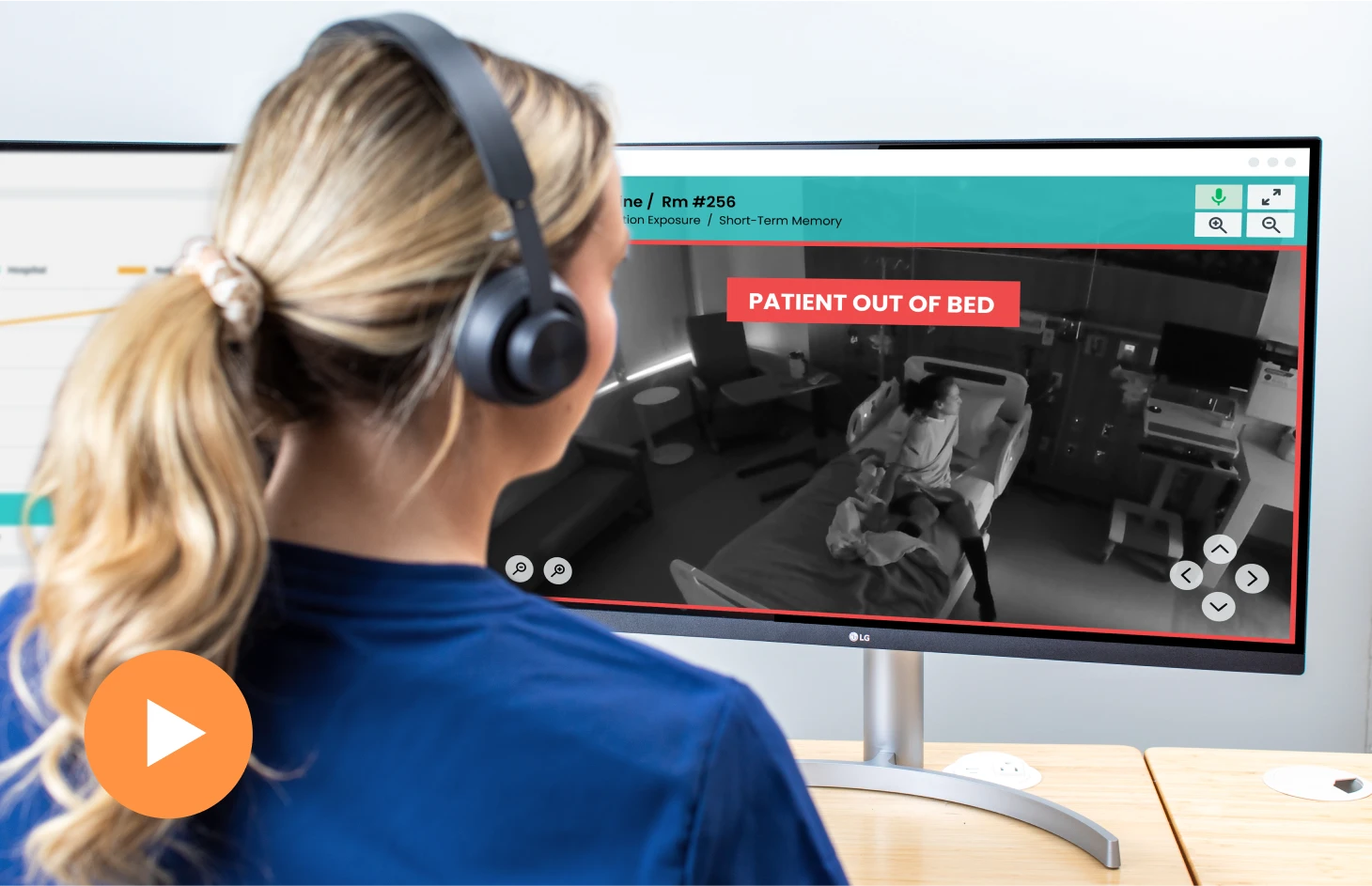
A. In general, hospitals begin their journey into virtual nursing by employing one of the two primary models that have developed across the healthcare industry. One of those virtual nursing models is what we call the expert oversight tele-nurse model. In this approach, virtual nurses focus on overseeing higher-acuity patients for potential deterioration triggers, supporting novice nurses, and conducting virtual rounding.
An example of a hospital that has implemented this model is Colorado-based UCHealth, which reduced emergency “code blues” by 70% after implementing a virtual nursing program that improved detection of patients experiencing deterioration.
UCHealth has found that virtual nurses can observe changes in patients’ health status, just as they would if they were in rooms with patients, which has helped reduce phone calls and bedside interruptions for in-hospital nurses.
Separately, one hospital in the Southeastern U.S. has launched a virtual nursing program to decrease holding times in the emergency department by streamlining admissions from the ED to inpatient beds. Hospital leaders view this program as a means of supporting nurses on the frontlines without compromising patient safety or patient experience.
Q. The second model you call the “clinical resource tele-nurse.” Please describe how this works in-person and virtually.
A. The second model of virtual nursing, called the clinical resource tele-nurse model, is focused on using virtual clinicians for admission and discharge support, patient and family education, consults, and more. This model supports episodic intervention with two-way audio-video technology allowing personal interaction with the patient during important care events.
After having successfully implemented a virtual sitting program in 2020 in its medical surgical and intensive units, a hospital in the Southeast has launched a pilot virtual nursing program to decrease ED holding times by streamlining admission from the emergency department to inpatient beds.
The medical center sees this as a way to support nurses on the frontlines without compromising patient safety or patient experience.
Q. Where should healthcare provider organization health IT leaders interested in virtual nursing begin the process of starting a program?
A. The first step to starting a virtual nursing program is to identify the biggest challenges that are confronting the provider organization. Doing so will provide insights about unique pain points and clues about how to relieve them.
Gather a group of cross-functional stakeholders, including bedside staff, and listen to them describe the problems they encounter, which are likely to include challenges such as burnout and exhaustion, patient throughput bottlenecks, rising patient complexity, and retirement vacancies causing a lack of highly experienced staff.
Next, prioritize the challenges by greatest impact, build a compelling business case to health system executives about how virtual nursing will lead to financial and operational improvements, and select the right vendor partner.
To ensure success, do not attempt to DIY this. Partner with an experienced virtual care company that offers a system with very high uptime and very good audio and video quality. Ideally, a vendor with experience providing video and audio in the acute care space, for example, a tele-sitting company, and be sure they also have exceptional 24/7/365 customer care.
The ideal virtual care platform enables virtual team care by combining remote patient sitters, virtual nurses, and other providers in a single enterprise technology solution to enhance clinical care without placing any additional burdens on existing staff.
Once you’ve selected a tech partner, it’s time to select the first use case.
For a virtual nursing program’s first use case, it is advisable to start small to demonstrate early success. For example, consider launching in a single unit or department. After rolling out the first use case, spread the word about the virtual nursing program’s positive impact on staff and patients.