Posted on July 15, 2026 by Ali Jewett - Uncategorized
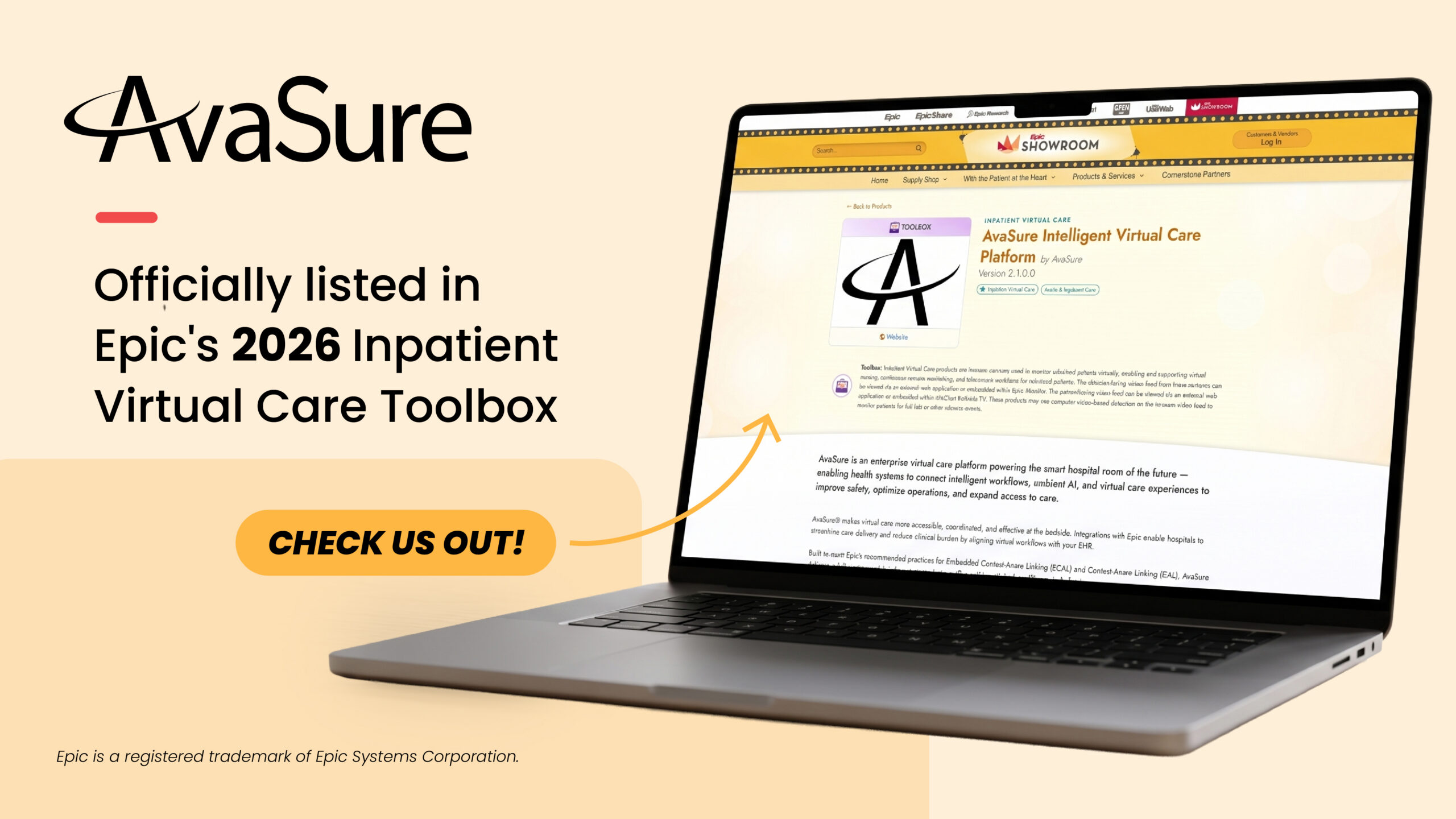
GRAND RAPIDS, MI – July 15, 2026 – AvaSure, the leading virtual care and smart room platform for hospitals, today announced that its virtual care platform has received an Epic Toolbox designation for 2026 in the Inpatient Virtual Care category. The designation recognizes that AvaSure meets Epic’s recommended practices for integration and functionality, enabling clinical workflows to leverage virtual care capabilities when and where care happens for patients.
As health systems invest in smart hospital room strategies, the challenge is no longer deploying individual technologies – it’s connecting them into a unified clinical experience. AvaSure serves as the platform layer that brings virtual care, AI applications, patient engagement technologies, and the EHR together on a single platform. By providing shared access to in-room audio, video, and clinical workflows, AvaSure enables health systems to adopt new innovations over time while protecting existing technology investments. AvaSure’s open architecture creates compounding value as the smart room ecosystem grows — every new AI partner that integrates with the platform makes it more capable for every connected health system, backed by a roadmap shaped by real-world clinical needs.
Built to align with Epic’s recommended practices for Embedded Context-Aware Linking (ECAL) and Context-Aware Linking (CAL), AvaSure enables seamless virtual care experience directly within Epic workflows, including:
Virtual Visits: Launch virtual visits directly from Epic user interfaces, allowing clinicians to connect with patients and care team members without leaving Epic.
Continuous Observation with Epic Monitor: Combine AvaSure’s clinical-grade virtual care infrastructure with Epic Monitor Remote Sitter capabilities to support centralized patient observation and rapid response for fall prevention, patient safety, staff duress, and other clinical workflows.
MyChart Bedside TV: Extend virtual care to the patient room TV through an embedded MyChart Bedside TV experience, making it easier for patients to connect with caregivers and care services.
Receiving the 2026 Toolbox designation reflects AvaSure’s ongoing commitment to delivering integrated virtual care experiences that fit naturally into clinician workflows. What sets AvaSure apart is a true secure and open architecture — the ability to integrate not only with Epic, but with a wide range of third-party systems, devices, and applications. This flexibility allows hospitals to design smart room workflows tailored to their unique needs, maximize existing technology investments, and drive innovation across the enterprise.
“Every technology investment in healthcare must deliver measurable value,” said Adam McMullin, CEO of AvaSure. “AvaSure has helped health systems reduce the cost of care by more than $826 million through virtual care programs that improve operational efficiency, workforce sustainability, and patient safety. Receiving Epic Toolbox designation for 2026 further strengthens our ability to deliver those outcomes through seamless integration with the workflows clinicians rely on every day, helping health systems maximize and protect the investments they have already made in Epic.” –Adam McMullin, CEO of AvaSure
With more than 1,200 hospital customers and over 15 years of experience helping health systems deploy and scale virtual care programs, AvaSure continues to advance the future of inpatient care through intelligent virtual care technology, AI-enabled workflows, and proven clinical outcomes.
To learn more about AvaSure’s Virtual Care Platform and its Epic integrations, schedule a call today.
Epic and MyChart are registered trademarks of Epic Systems Corporation.
About AvaSure AvaSure® is an intelligent virtual care platform that healthcare providers use to engage with patients, optimize staffing, and seamlessly blend remote and in-person care at scale. The platform supports virtual nursing, virtual sitting, virtual visits, and AI-enabled clinical workflows while meeting the highest enterprise IT standards. Backed by one of the largest clinical teams in virtual care, AvaSure helps health systems achieve measurable outcomes, improve workforce efficiency, and enhance patient and staff safety. AvaSure is trusted by more than 1,200 hospitals and has supported over 5,000 deployments across North America. To learn more, visit AvaSure.com.
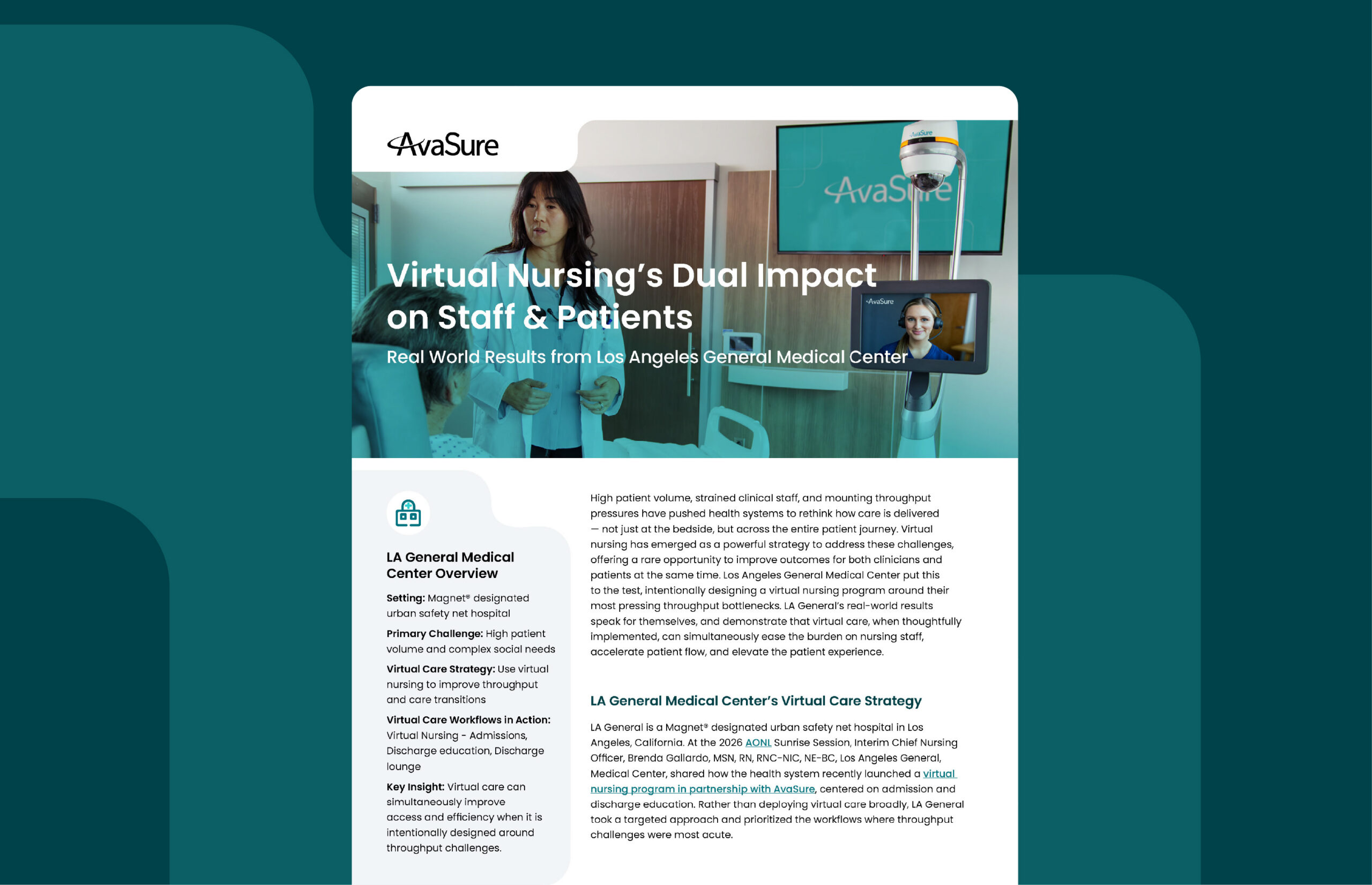
Virtual nursing isn’t just a staffing fix, it’s a throughput strategy. When designed around an organization’s specific bottlenecks, it can ease pressure on nursing staff and speed up the patient journey at the same time, without sacrificing the quality of care patients receive.
Download the guide to see real-world results from Los Angeles General Medical Center’s virtual nursing program and learn:
How LA General’s virtual nursing strategy cut ED holding time by 16% and discharge turnaround time by 31%
Why virtual admissions earned a 4.7/5 patient satisfaction rating
How to identify the workflows in your own organization where virtual care will have the greatest impact
Why virtual care value shows up differently across the patient journey and how to measure what matters for your system
AvaSure and Apella partner to deliver purpose-built ambient intelligence across the enterprise – helping hospitals avoid the compromises of one-size-fits-all platforms.
Hospitals are under increasing pressure to improve throughput, support overstretched care teams, and deliver measurable operational and financial outcomes amid rising costs, reduced reimbursement, and staffing challenges.
That is why AvaSure and Apella have formed a strategic alliance to bring connected ambient intelligence across the hospital – from inpatient care environments to the operating room.
AvaSure delivers one of the most widely adopted virtual care, ambient AI, and smart room platforms designed to optimize inpatient workflows, reduce costs, and expand access to care, while Apella provides real-time perioperative intelligence that helps surgical teams improve OR utilization, reduce delays, and optimize procedural flow with measurable operational and financial impact.
Together, the partnership helps hospitals improve throughput, coordination, and operational performance across the enterprise.
“Health systems are looking for technology investments that deliver measurable operational and financial value. By bringing together AvaSure’s virtual care platform and Apella’s perioperative intelligence capabilities, we are helping hospitals improve efficiency across critical care environments while driving verifiable financial and clinical outcomes – creating a stronger foundation for enterprise-wide operational transformation.” — Adam McMullin
Helping Hospitals Improve Operational and Financial Performance
Operational inefficiencies across inpatient and perioperative environments can have a significant impact on hospital capacity, staffing, and financial performance. Delays in patient progression, underutilized OR time, fragmented workflows, and administrative burden all contribute to rising costs and operational friction.
“Together, Apella and AvaSure deliver what most hospitals prioritize when it comes to their investments in modern AI: real operational ROI. Novel, trustworthy data is the starting point to delivering better outcomes for patients and care teams alike. Apella and AvaSure have collectively built the specialized expertise needed to optimize workflows across the entire surgical, pre-op, and post-op lifecycle.” — Jordan Tuttle, Apella Co-Founder and COO
Together, AvaSure and Apella help hospitals create greater operational visibility and workflow intelligence across the enterprise — enabling teams to improve throughput, optimize existing resources, and contribute to their bottom line.
Driving Operational Performance Across the Hospital
Through virtual care workflows, AvaSure helps health systems accelerate patient progression, streamline care coordination, and improve inpatient throughput. Apella extends real-time operational intelligence into the perioperative environment, helping surgical teams improve scheduling accuracy, reduce delays, and optimize OR utilization.
Organizations using AvaSure have achieved:
11.6% reduction in length of stay
16% reduction in ED holding time
31% reduction in discharge turnaround time
Organizations leveraging Apella have achieved:
24% improvement in scheduling accuracy
69-minute average reduction in surgical delays
56 additional block hours per OR, per month
Delivering Measurable Financial Impact
By helping hospitals optimize workflows and make better use of existing staff and capacity, both organizations are driving measurable financial outcomes.
At Houston Methodist, Apella helped generate approximately $2.2 million in additional revenue during a pilot focused on improving surgical block utilization and OR efficiency.
Meanwhile, Hackensack Meridian Health achieved approximately $1.6 million in cost savings through AvaSure virtual care initiatives driven by nurse retention improvements, reduced agency spend, length of stay improvements, readmission reductions, falls prevention, and reductions in CLABSI and CAUTI events.
In addition, AvaSure virtual sitter programs have helped health systems save more than $826 million in labor costs. And hospitals using Apella increase capacity for two more surgical cases per OR per month without the cost of additional facilities, staff, or overtime.
Purpose-Built Intelligence for High-Impact Care Environments
As health systems evaluate AI strategies, many are recognizing that different care environments require different operational workflows, data models, and intelligence capabilities.
Rather than forcing hospitals into generalized platforms designed to approach every environment the same way, AvaSure and Apella bring specialized intelligence to the areas where operational coordination, workflow efficiency, and resource optimization matter most.
By combining intelligent virtual care with AI-driven perioperative workflow intelligence, the partnership helps hospitals extend ambient intelligence across the enterprise while supporting the unique operational needs of both inpatient and surgical environments.
As virtual care matures, the question is no longer whether virtual care can work, but how it works best in different environments, and how success should be measured. Real-world results matter, even early in the journey. Early signals for clinicians, like decreases in re-admission or decreases in time spent on charting, are strong indicators of long-term financial outcomes.
Download the guide to see real-world results from Hackensack Meridian Health’s virtual care journey and learn:
How to measure success that actually matters for your health system — not just replicate another’s model
How HMH achieved $1.6M in cost avoidance across nurse retention, length of stay, readmissions, falls, and more
How to spot early signs of success in your virtual care program
Why early clinical wins are just as important as long-term financial outcomes
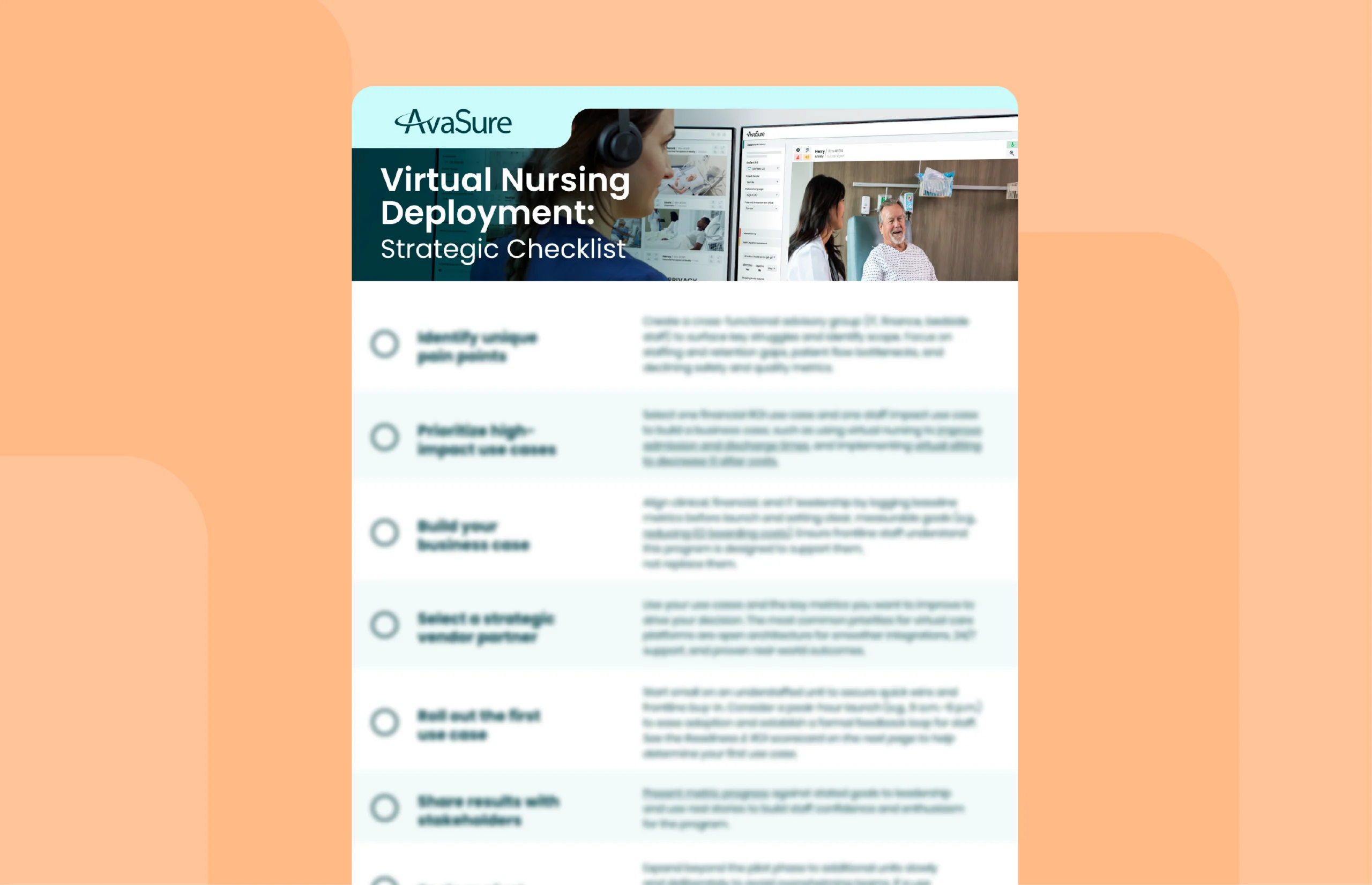
Are you ready to take actionable steps to deploy your virtual nursing program?
Download the checklist to uncover:
A straightforward one page checklist with step by step actions, details, and insights.
A readiness and ROI scorecard to help you determine which first use case is right for your program.
Once you have downloaded the checklist, read our whitepaper to dive even deeper into how to advance your virtual care journey and measure success, with real-world virtual nursing results from Hackensack Meridian Health.
The Rural Health Transformation Program (RHTP) provides $50B in CMS funding (2026–2030) to strengthen rural hospitals.
States submitted transformation plans prioritizing technology, workforce resilience, and AI.
Virtual nursing, TeleHealth, and tele-specialty consults directly align with RHTP goals.
Hospitals can use RHTP funds to reduce falls, overtime, sitter costs, and specialty care gaps.
Sustainable virtual care models reinvest efficiency savings beyond federal funding.
What is the Rural Health Transformation Program (RHTP)?
Rural and community hospitals face critical workforce shortages and financial distress, with nearly half operating at a loss as of 2023, according to an AHA analysis of RAND Hospital Cost data. To address these pressures and improve care quality, Congress established theRural Health Transformation Program (RHTP)under the 2025 One Big Beautiful Bill Act (OBBBA). This $50 billion Centers for Medicare & Medicaid Services (CMS) initiative (FY 2026–2030) provides $10 billion annually to strengthen rural healthcare and offset projected funding gaps.
How CMS Administers RHTP Funding
States are the direct recipients and had to submit a Rural Health Transformation Plan for CMS approval. Half of the funding is divided equally among participating states—guaranteeing at least $100 million per year for five years if all states join—while the other half is distributed via a CMS formula. This massive pool supports infrastructure, technology, and workforce improvements for nearly 1,800 rural hospitals and 60 million residents.
How Critical Access Hospitals (CAHs) Benefit from RHTP Funding
While all rural providers are eligible, the nation’s 1,350 Critical Access Hospitals (CAHs) stand to benefit most, particularly in the Midwest and states like Texas, Iowa, and Kansas. By investing in these hospitals, the RHTP aims to prevent closures, preserve essential services like emergency and maternity care, and improve health outcomes in rural America.
Contact AvaSure to discuss how you can use RHTP funding for virtual care.
How can telehealth and virtual care benefit rural hospitals?
RHTP applications from numerous states have revealed a priority among rural hospitals: the use of telehealth and virtual care to help extend and improve care where things like specialty care are often unavailable.
By integrating telehealth, rural facilities can bridge the “specialty gap,” allowing local doctors to consult with world-class neurologists or cardiologists in real-time without transferring the patient. This “keep it local” approach not only improves patient outcomes during emergencies but also stabilizes the hospital’s finances by retaining admissions and reducing the reliance on expensive traveling staff. In addition, by leveraging AI and virtual care, rural hospitals can expand local access and boost financial sustainability while delivering higher-quality care. These innovations do more than just improve patient outcomes and ROI; they actively reduce safety risks like falls, alleviate staff burnout, and foster collaborative models of care. See how Hackensack Meridian Health improved nurse satisfaction and patient outcomes through virtual nursing.
How do states plan to use their funding for the Rural Health Transformation Program (RHTP)?
States submitted plans in December 2025 that had to meet specific criteria defined by CMS. Funding for these plans was released in January 2026. The plans had to address how hospitals will:
Prioritize the use of new and emerging technologies including AI to improve rural health outcomes
Improve access to care locally
Enhance quality metrics for rural patients
Foster partnerships (e.g. small hospitals collaborating with larger systems) and ensure financial stability of rural providers
Tackle causes of rural hospital closure
How can hospitals leverage RHTP funding?
1. Engage State RHTP Leadership
Coordinate with your state health department or Medicaid agency to include virtual care in your Rural Health Transformation Plan. Highlight its impact on workforce resilience and patient safety.
To strengthen your case, align the stated goals to the RHTP program and track them. The outcomes that AvaSure has benchmarked with partner hospitals with virtual care programs are:
72% improvement in 1:1 sitter usage
11.6% improvement in length of stay
26% improvement in RN overtime
30-50% improvement in falls
4. Build a Sustainable Model
Reinvest efficiency savings and improved performance outcomes to sustain virtual nursing operations post-RHTP funding.
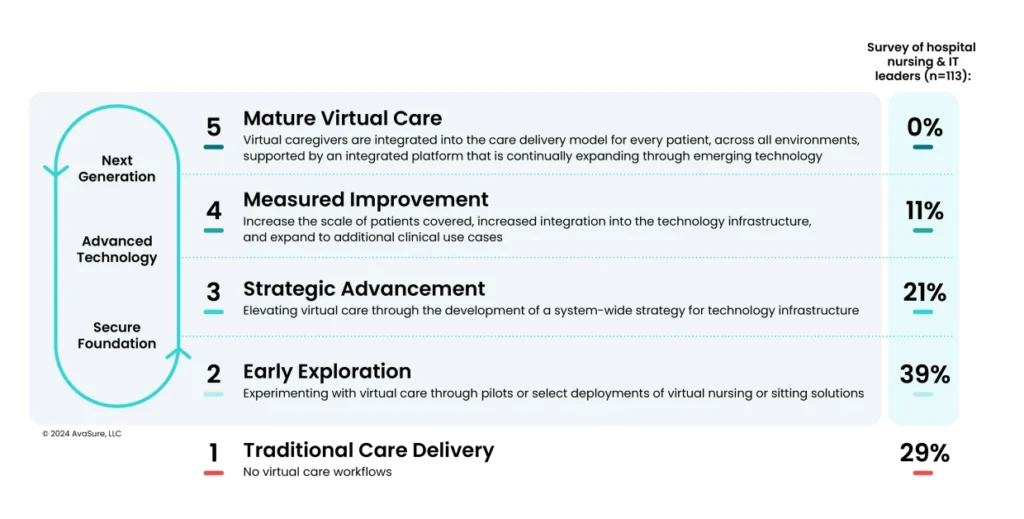
AvaSure’s maturity model provides a strategic roadmap for health systems to transition from initial pilots to a fully integrated virtual care delivery system. It serves as a vital framework for leaders to benchmark their current capabilities and identify the specific infrastructure and workflow milestones required to reinvest efficiency savings and sustain high-performance virtual nursing long after the conclusion of RHTP funding.
How AvaSure Aligns with the Rural Health Transformation Program
AvaSure, the industry leader in virtual nursing and continuous patient monitoring, helps hospitals extend nursing capacity, reduce falls and sitter costs, and enhance care quality through a proven operational model. AvaSure’s virtual care platform is fully aligned with RHTP’s focus on technology-enabled workforce transformation.
RHTP Funding Categories Supported by AvaSure:
Workforce development and modernization
Technology-enabled patient care and safety
Training and technical assistance
Quality and efficiency improvement initiatives
The Rural Health Transformation Program prioritizes initiatives that stabilize and modernize the healthcare workforce, improve patient safety, and enable sustainable operations in rural hospitals. AvaSure supports all three objectives by bringing virtual nursing and continuous observation into daily hospital operations:
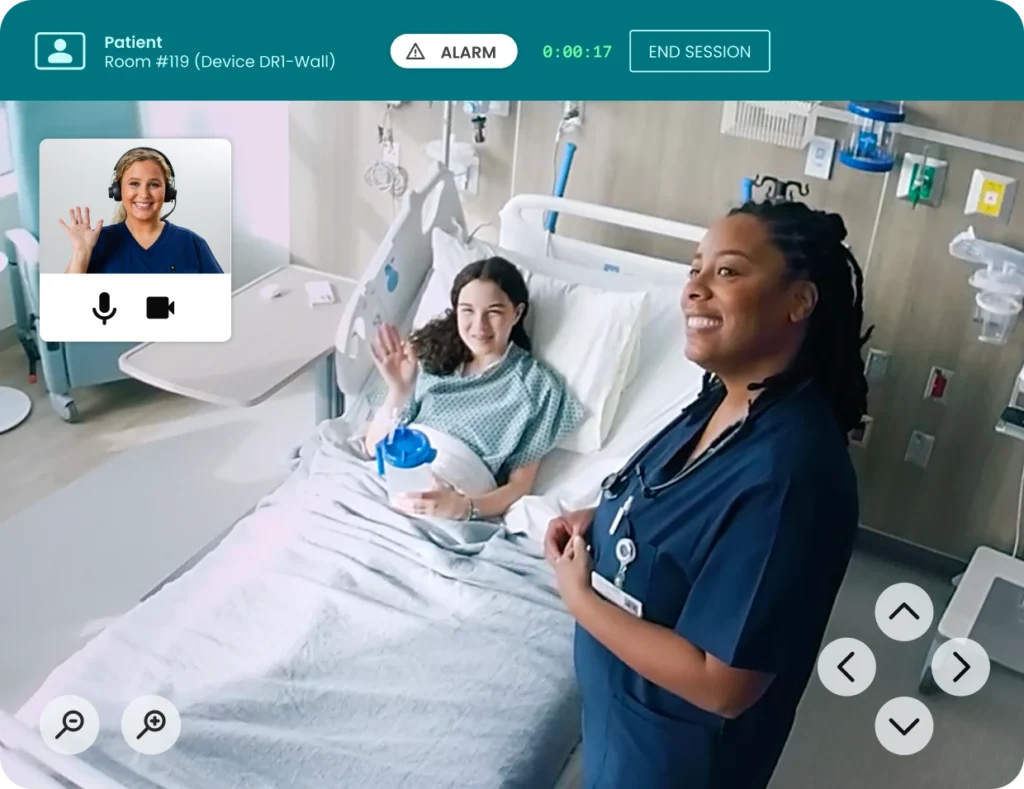
Virtual Nursing: Augments bedside teams with remote nurses who handle admissions, discharges, and patient education to reduce admin burden.
Continuous Observation (TeleSitting): Centralized video observation reduces falls, elopements, and 1:1 sitter costs.
Specialty Consults: Consult with specialists in another location to expand care without having to move your patient.
This in turn leads to benefits such as:
Workforce Flexibility: Reduces overtime, improves staff retention, and increases productivity.
Patient Safety: Delivers continuous monitoring and rapid response support.
Ultimately, access to care and physician specialists remains one of the most pressing challenges for rural hospitals, leading many to prioritize specialty health and telehealth consults in their strategic applications. To effectively remedy these gaps, it is essential to select a virtual care platform that leverages the specific partnerships necessary to bridge the distance between patients and specialized expertise.
How Can AvaSure Help?
AvaSure’s partnership with Equum Medical, a telehealth-enabled clinical workforce organization, will provide rural hospitals with easy access to virtual specialty consults. The company’s broad portfolio of services addresses the driving challenges of Access and Capacity for health systems, including multi-specialty telemedicine, critical care, virtual nursing, virtual sitter monitoring, and telemetry. Solutions include:
Tele-ICU and critical care support, including surge capacity and after-hours coverage
Virtual hospitalist support for nights, weekends, and hard-to-staff locations
Care coordination that helps reduce avoidable transfers, keep patients local, and support patient flow with integrated virtual nursing capabilities across care venues
These solutions strengthen financial sustainability while offering scalable, broadband-friendly technology specifically designed for the unique constraints of rural settings. Unlike typical telehealth partnerships that add separate point solutions, the integrated model runs on a single platform that many hospitals already use for virtual nursing and patient observation, paired with Equum’s physician and clinical programs.
Your RHTP Virtual Care Strategy
AvaSure equips rural hospitals with innovative virtual care and AI-powered solutions that expand local access, enhance care quality, and strengthen financial sustainability. By reducing adverse events like patient falls, easing workforce burdens, and fostering collaborative models of care, AvaSure helps rural providers meet and exceed the goals of the Rural Hospital Transformation Program.
Posted on February 18, 2026 by Maura Kretzer - Uncategorized
How Providence St. Peter Hospital and Providence Oregon Improved Caregiver Safety Through Remote Visual Monitoring
Overview
Workplace violence has become a critical challenge across health systems, affecting caregiver morale, patient safety, and the overall care environment. Providence St. Peter Hospital in Washington and the Providence Oregon region implemented a virtual care monitoring program using AvaSure technology to proactively reduce violent incidents and protect staff and patients. Their experiences demonstrate how virtual engagement, predictive monitoring, and strong interdepartmental collaboration can dramatically improve safety outcomes. [Eyes on Sa…Transcript | Word]
Challenge
Both regions were seeing increases in:
Physical and verbal aggression toward nurses and CNAs
Visitors introducing illicit substances or behaving violently
Patients harming themselves or attempting to harm caregivers
False allegations against staff, creating legal and safety risks
Traditional approaches—such as staff rounding and signage—offered awareness but not reliable prevention. Violent events were still leading to caregiver injuries and unsafe environments. [Eyes on Sa…Transcript | Word]
Solution: Remote Visual Monitoring (RVM) with AvaSure
Protecting staff during a bathroom attack, when techs saw nurses running out of the room and immediately called security. [Eyes on Sa…Transcript | Word]
These cases highlight how remote monitoring enables fast intervention, even when staff cannot directly see risk evolving.
Culture & Governance Enhancements
Both regions emphasized:
Violence Prevention Committees with nurses, security, and leaders to review events and coordinate improvements. [Eyes on Sa…Transcript | Word]
Regular communication via huddles, newsletters, SharePoint, and site visits to build trust between bedside staff and monitoring techs. [Eyes on Sa…Transcript | Word]
Empower virtual safety attendants: instruct them to call security even if bedside staff says, “We’re okay.” Better to over-respond than underrespond. [Eyes on Sa…Transcript | Word]
Providence St. Peter Hospital and Providence Oregon successfully transformed their approach to workplace violence by integrating virtual care monitoring into daily operations. Their experiences show that proactive surveillance, empowered staff, and clear escalation pathways can significantly reduce risk and create safer environments for caregivers and patients alike.
This case study demonstrates how modern virtual care infrastructure—used thoughtfully—serves as both a protective shield and a tool for continuous care improvement.
Posted on February 12, 2026 by Maura Kretzer - Uncategorized
Clinical excellence and financial viability are two sides of the same coin, yet they often speak different languages. Most clinical leaders present data, but the most successful ones tell a financial story.
Watch our webinar for a deep dive with AvaSure’s Chief Clinical Officer Lisbeth Votruba MSN, RN, CAVRN, FAONL, and MedStar Health’s Chief Medical Officer for Telehealth, Ethan Booker, MD, FACEP, to learn:
Common mistakes when presenting business cases to executives
How to create a great hook for your business case for an executive-level audience
How to use financial data to tell your story and get to conviction
Watch this high-impact briefing on the breakthroughs defining our year. We revealed new product updates, a major EQUUM announcement, and shared the strategy behind Hackensack Meridian Health’s virtual nursing pilot results. Plus, get a special inside look into the AI updates transforming our virtual care platform.
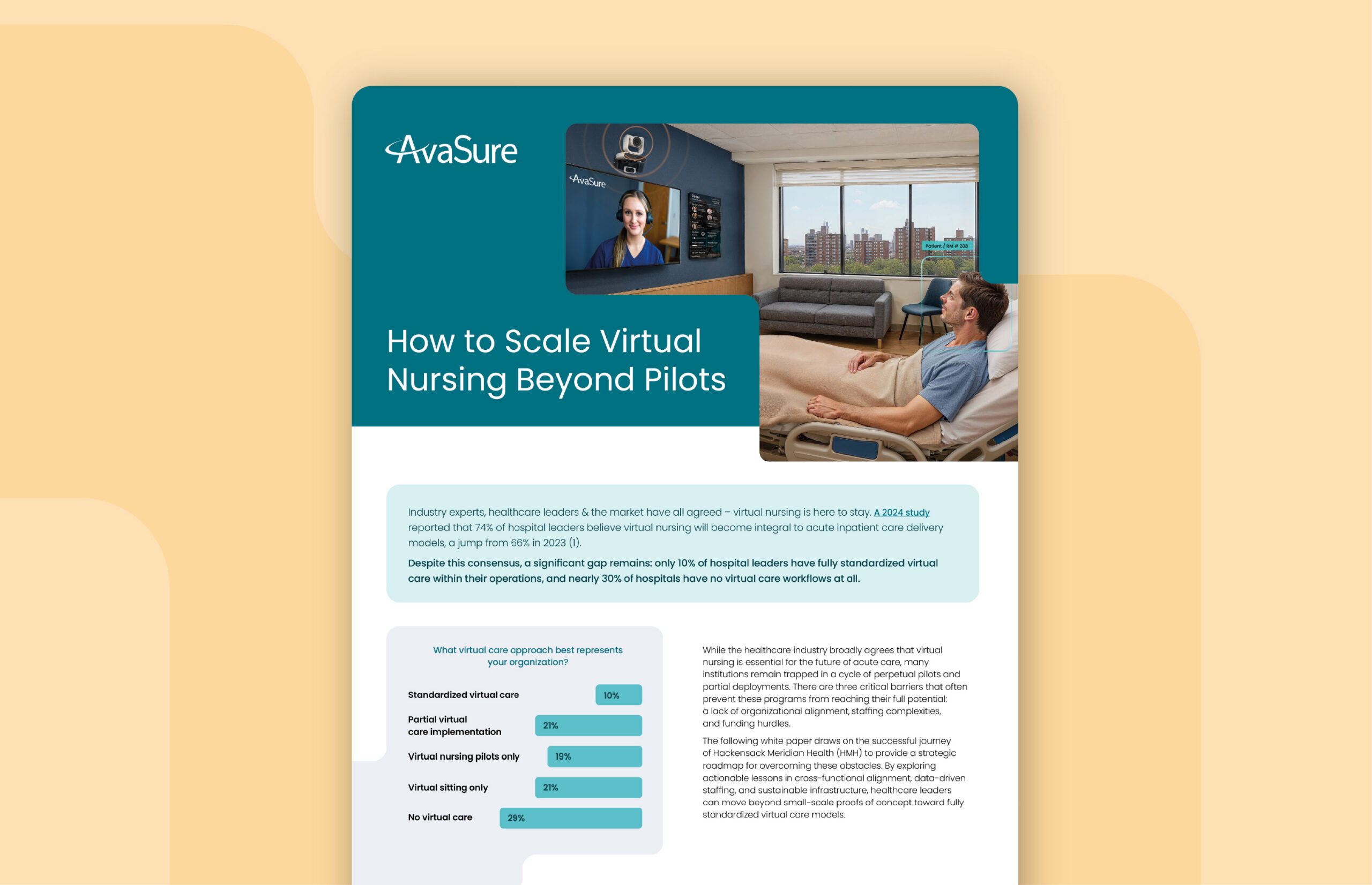
Industry experts and healthcare leaders agree that virtual nursing is essential for the future of acute care. However, while 74% of hospital leaders believe virtual nursing will become integral to inpatient delivery, only 10% have fully standardized these programs within their operations.
To help organizations move beyond the cycle of perpetual pilots, this whitepaper provides a strategic roadmap for scaling virtual care across the enterprise. Drawing on the successful journey of Hackensack Meridian Health (HMH), we explore how to overcome critical barriers in organizational alignment, staffing, and funding.
Download the whitepaper to uncover:
Actionable lessons for cross-functional alignment, including how to establish specialized project teams for technology, clinical workflows, education, and more.
Real-world clinical and financial impact, such as HMH’s 11.6% reduction in length of stay and 65% reduction in RN traveler hours.
Data-driven staffing strategies that identify peak utilization windows and determine optimal nurse-to-patient ratios to ensure long-term sustainability.
Funding and infrastructure blueprints for using labor savings from virtual sitting to offset virtual nursing investment costs.
Once you have read the whitepaper, download our virtual nursing deployment checklist for a straightforward and actionable one-pager, and a readiness and ROI scorecard to help you determine which first use case is right for your program.