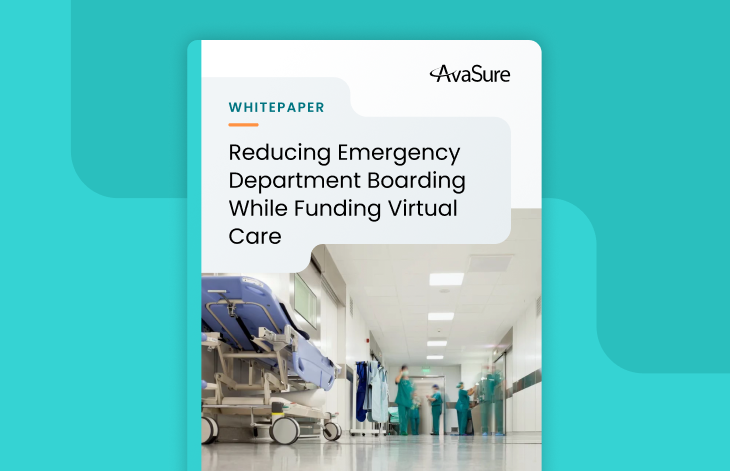
Emergency Department (ED) boarding continues to strain hospitals, driving up costs, compromising patient outcomes, and contributing to clinician burnout. However, this critical issue presents an overlooked opportunity: what if solving ED boarding could pay for itself—and even fund a virtual nursing program? This whitepaper explores how tackling ED boarding not only improves operational efficiency and patient flow, but also offers a path to sustainably deploy virtual care solutions without additional budgetary strain.
Download the guide to learn:
How addressing ED boarding issues could help fund your virtual care program deployment through cost savings
How much ED boarding increases per-patient costs by day, totaling millions in annual losses
The clinical and operational impacts of ED boarding, including increased mortality and staff burnout
The top ways virtual nurses directly impact ED boarding
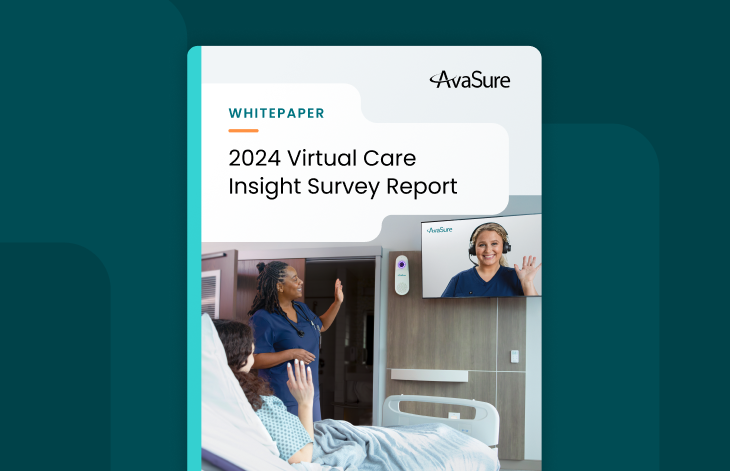
While most IT and clinical leaders believe that inpatient acute virtual care will play an increasingly significant role in care delivery, the reality is that it is still in the early stages of adoption. Survey data reveals a surprising gap: 29% of organizations have no virtual care programs, even as hospital leaders rank it as a top priority.
To help organizations bridge this gap, the 5-stage Inpatient Virtual Care Maturity Model offers a comprehensive blueprint for care model redesign, empowering leaders to drive change management and implement manageable, outcome-focused strategies.
What stage is your organization? Download the report to learn:
Where hospitals currently stand in virtual care maturity
How virtual care is reducing the burden on bedside staff
The key metrics hospitals use to measure virtual care program success
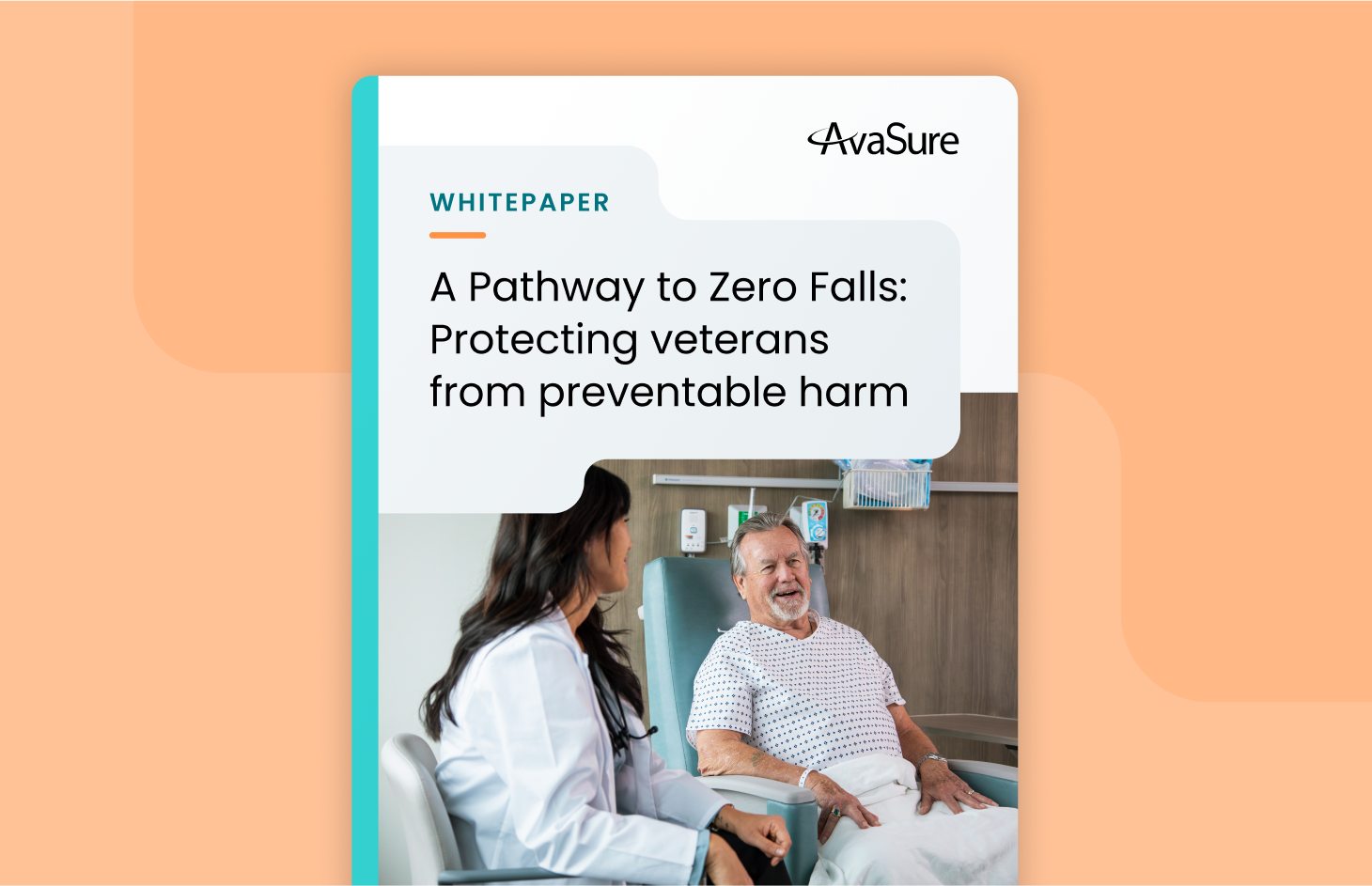
Falls remain a persistent and costly issue among hospitalized veterans, who are at a higher risk due to more prevalent chronic conditions. In response, the Veterans Health Administration introduced the SAFE STEPS for Veterans Act in 2024, creating an Office of Falls Prevention. Staffing shortages, particularly among Patient Care Technicians and Certified Nursing Assistants have exacerbated patient safety concerns, with patient falls rising 253% from 2020 to 2022.
To reduce the need for 1:1 sitters and improve safety, AvaSure’s AI-powered virtual care platform enables hospitals to remotely monitor high-risk patients and prevent falls and other adverses events.
Download the guide to learn:
How to reduce falls by nearly 20%
Ways to improve staff efficiency & satisfaction
The top 4 adverse events prevented in VA hospitals
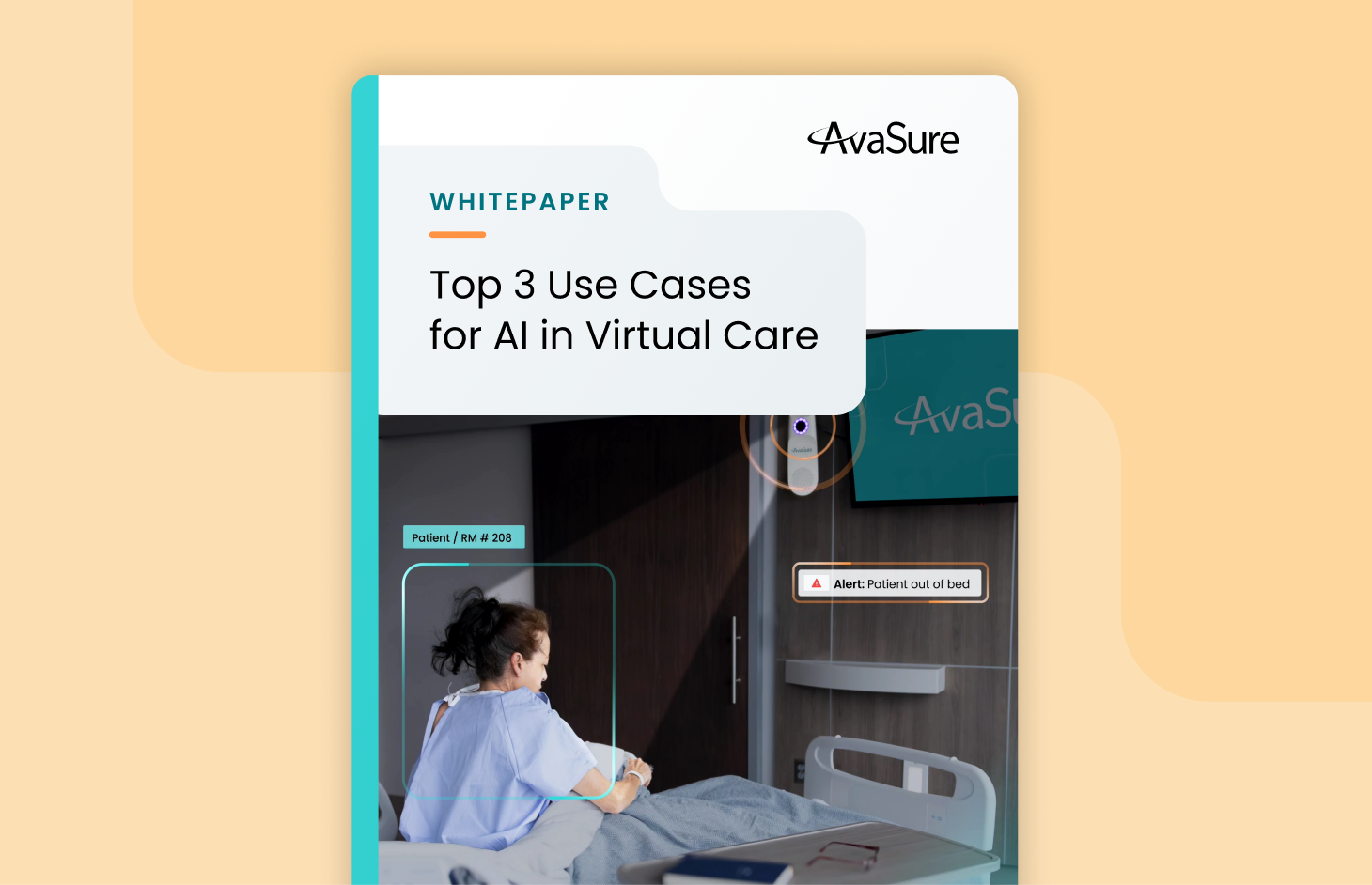
Explore how artificial intelligence—particularly computer vision, ambient listening, and agentic AI—can transform healthcare delivery by prioritizing staff and patient safety, improving patient experiences, and optimizing workforce efficiency. AI plays a critical role in creating proactive safety measures, streamlining operations, and empowering patients through responsive, voice-activated tools. While AI presents powerful opportunities to optimize care, it is crucial to acknowledge the importance of ethical implementation, staff engagement, and seamless integration into clinical workflows to ensure AI acts as an enabler, not a replacement, in patient care.
What You Will Learn:
How AI technologies like computer vision and agentic AI improve patient and staff safety through real-time monitoring and escalation detection.
Ways AI boosts operational productivity by automating routine tasks such as documentation, rounding, and request routing.
How AI enhances the patient experience with voice-activated assistants and personalized, timely services that foster comfort and control.
Hospital CIOs need technology partners that can significantly reduce administrative burden on clinical staff, lower costs and improve patient outcomes by integrating virtual care technology. Many health systems are implementing virtual care platforms for use-cases such as admissions, discharge, specialty consults, and virtual rounding. Virtual care is more than video calls; it combines in-person and remote treatment and requires scalable, enterprise-wide technology that doesn’t create a burden on IT resources.
Find out how AvaSure, the leader in Virtual Care with over 1,100 customers, can help you move from virtual sitting to a true end to end virtual care strategy.
Implementing virtual care comes with a unique set of challenges. Hospitals must find a way to provide quality virtual services while controlling the cost of the technology that supports them – a difficult task when leadership is already under pressure to tighten their budgets.
Download the blueprint to learn:
Top 3 use cases for a virtual care platform
CIO’s checklist for choosing a virtual care vendor
The virtual care adoption model for a successful rollout
Join 1,100+ hospitals across the US in ushering in the future of virtual care.
In the face of nursing shortages and escalating patient acuity, healthcare is in a perfect storm. Nurses are burdened with increasing demands and 52% are contemplating leaving the bedside. This environment is forcing hospital leadership to think differently about how technology can help create a new model of care delivery.
Virtual Nursing offers an augmented care environment where a virtual team supports bedside nurses and elevates hands-on patient care. AvaSure’s virtual care platform can assist staff with:
Assistance with documentation
Specialty consults
Sepsis and deterioration detection/prevention
Novice nurse mentoring
Download the use case study to learn how this model of care can help your health system reduce labor costs and support bedside nurses.
Posted on February 19, 2024 by Holly Martin - Uncategorized
While many may associate virtual monitoring/virtual sitting with falls risk patients, there are a number of ways that the use of Virtual Safety Attendants (VSAs) and video-based monitoring technology can positively impact pediatric patients. Increasing in importance as hospitals across the nation and being exacerbated by persistent staffing shortages and the concurrent mental health crisis amongst young Americans.
The most prevalent use cases for virtual sitting in the pediatric space include:
Low-Moderate Suicide Risk
According to a JAMA editorial, suicide is up by 69.5% for children and adolescents making it essential to have solutions in place for monitoring these patients.
Eating Disorders
While supervision is generally considered an essential element of caring for hospitalized patients with eating disorders, it is costly, reduces staff availability for the care of other patients, and can be a barrier for patients.
Substance Abuse
Children that suffer from either intentional drug exposure due to substance abuse or, as is a rising trend due to the legalization of marijuana in many states, unintentional drug exposure are typically candidates for 1:1 monitoring during a portion of their stay.
Mom/Baby
While falls in the most thought of sense may not be a risk in pediatric populations, infant falls are a severely under-reported adverse event that can be costly and add to the patient’s length of stay. Often occurring when a parent falls asleep while holding the newborn, dropping the neonate to the floor, an infant fall can occur during transfer of the child from one person to another, by a family member or a slip and fall of family or staff.
Workplace Violence Prevention
Health care workers are 4 times more likely to suffer violence than workers in other industries. Prevention in the pediatric setting can be especially challenging as patients with behavioral tendencies for physical violence (i.e. hitting and biting) may not be identified prior to admission.
Child Protective Use Cases
Non-Accidental Trauma: When there is a concern with the family member, or visitors, behavior that raises a safety concern for a child, it can also present a safety concern for a 1:1 sitter assigned to be in the room.
No Family at Bedside: When children are very ill, parents are not always able to spend time at their bedside due to work commitments and caring for other children, which can create a sense of distress.
Medical Device Interference
Certain devices including IVs, catheters, drains and tubes have placement that is essential to the health, recovery and well-being of the pediatric patient. Virtual Sitting can be useful in keeping extra eyes on these patients, notifying caregivers on the floor if the child is pulling at, twisting or attempting to intentionally or non-intentionally remove the device.
Used in various settings: Emergency Department, Pediatric Units, NICU, PICU, Pediatric Hospitals
Posted on February 5, 2024 by Olivia Phillips - Uncategorized
Healthcare workers are 5x more likely to experience workplace violence; new strategies are necessary to keep staff safe.
Workplace violence in hospitals is not an isolated incident, and the impact reverberates throughout the organization, affecting morale, job satisfaction, and ultimately, patient outcomes. Forty-eight percent of nurses reported an increase in workplace violence in 2022 and 80% of sitters report experiencing violence. It’s time to invest in new ways to protect healthcare’s greatest resource.
Hospitals using the TeleSitter® solution to prevent workplace violence have increased by 107% since 2019. With 24/7 monitoring to keep 1:1 sitters out of harms way and immediate intervention alarms, virtual sitting has emerged as a proven method to reduce workplace violence.
Download the use case spotlight to learn new strategies and methods to keep your staff safe.
In a time where staffing shortages are impacting patient safety, virtual sitting continues to be a proven alternative to 1:1 sitters.
It’s no secret that staffing shortages are having a significant impact on patient safety, particularly when it comes to preventing falls.
Hospitals across the nation have experienced dramatic improvements in fall and 1:1 sitter reduction by adopting the TeleSitter® solution. For example, Community Health Systems (CHS) achieved a remarkable 76% decrease in falls. Similarly, the VA North Texas reduced sitting costs by nearly 90%. These success stories are just a few bright lights among AvaSure’s successful customers.
Over the past decade, nursing research has not only established the feasibility and safety of virtual sitting but has also illuminated its superiority in achieving patient safety outcomes when compared to traditional one-to-one sitting.
Download the latest use case spotlight to take the first step towards patient safety.