Author: Olivia Phillips

Breaking Free! Scaling Virtual Nursing Beyond Pilots

Nurse doing virtual nurse call on laptop

Industry experts, healthcare leaders & the market have all agreed – virtual nursing is here to stay. In a 2024 study, 74% of hospital leaders reported that virtual nursing will become integral to care delivery models in acute inpatient care —up from 66% in 20231. However, only 10% of hospital leaders have reached a phase where virtual care is a standard part of care delivery, and nearly 30% of hospitals have no virtual care workflows at all1

Why the gap? 

Pilot or partial deployments of virtual nursing are where most institutions are getting stuck! 

How can we break through perpetual pilots and scale virtual nursing to be a standard part of care delivery? 

Let’s ask the experts. 

AvaSure, a leading provider of Intelligent Virtual Care Platforms, consulted with two leading healthcare institutions that have successfully moved beyond the pilot phase and fully integrated virtual nursing into their daily patient care. Together, they explored how these organizations made the transition and shared valuable insights and advice for other institutions just beginning their virtual nursing journey.

UCHealth logo

UCHealth, a nationally recognized healthcare system with $7.5 billion in operating revenue and over 33,000 employees, operates 14 Colorado hospitals, providing more than 2,500 inpatient beds, and over 200 clinics across Colorado, southern Wyoming, and western Nebraska. Their 2016 Virtual Health Center significantly enhances patient care through virtual deterioration monitoring, TeleICU, centralized telemetry, virtual admission & discharge support, virtual sitting, virtual consults & more. This Virtual Health Center has touched over 2.3 million patient lives, achieving remarkable outcomes like reducing code blue rates by up to 40%, increasing rapid response rates and improving patient safety through virtual sitting, yielding nearly $9 million in 1:1 sitter cost savings.  To support these expanded use-cases and future-proof the patient room for a hybrid patient care model, UCHealth implemented a ‘camera-in-every-room’ philosophy.

Amy Hassell, MSN, BSN, RN, CNO of Virtual Health Center, UCHealth

Tamera Dunseth Rosenbaum, DNP, RN, NE-BC, System CNO of UCHealth

As New Jersey’s largest and most comprehensive not-for-profit healthcare network, Hackensack Meridian Health (HMH) delivers a full spectrum of medical services, innovative research, and life-enhancing care through its 18 hospitals, 36,000+ team members, 7,000 physicians, and 500+ patient care sites.  HMH kicked off their virtual nursing journey in 2024 with the goal of improving outcomes and patient/provider satisfaction. With a virtual nursing pilot focused on virtual admission & discharge support, they successfully removed time-consuming task-based work from bedside teams. Following a year of successful implementation, the significant results prompted hospital leadership to expand virtual care by installing devices in every patient room. Pilot results after 1 year:

  • 11.6% reduction in length of stay 
  • 2-point reduction in falls/1000 pt days with injury 
  • 65% reduction in RN traveler hours and 26% reduction in RN overtime hours
  • 0.68% reduction in readmission rates

Marie Foley-Danecker, DNP, RN, CCRN, NE-BE, Vice President & Chief Nursing Office of Hackensack Meridian Health


Pilot sticking point: Lack of organizational alignment on program goal requires vision & change management

Lesson One: It requires both leadership support and buy-in from frontline staff to be successful.

The true blending of virtual and in-person clinical workflows is a technology investment, a change in nursing practice and a change in patient care – so “don’t underestimate the amount of cross-functional alignment it takes to get to one platform, one operating strategy across the network – it takes a village,” said Marie Foley-Danecker. HMH has 5 distinct project teams that stood up to help scale their pilot across the system: 

  • Tech Build Team (Both Network and Site Level) – make decisions around hardware, software, server, infrastructure, hosting and more – ensuring the system has not just the right technology, but the support infrastructure needed to support ongoing virtual care.
  • Clinical Workflow Team – help to ensure that bedside workflows are standardized and the virtual workflows fit seamlessly into them.  If you don’t start with standard work at the bedside, it will be nearly impossible to add a virtual care workflow.
  • Nursing Operations Team – help manage staffing, define roles & responsibilities between team members and drive collaboration 
  • Education Team – ensure the internal education of facility teams, as well as patients & family members so that they understand the role of the virtual care team members in their visit
  • Communications Team – tackle marketing and promotion of the program externally, helping to improve the hospital’s reputation as a cutting-edge, patient-experience oriented site of care. Robust virtual care programs can also act as great recruitment tools for future nurses who want to work at systems investing in the latest technology. 

Lesson Two: Prepare for and be willing to adapt quickly.

“Be nimble and understand that you might not get it right, right out of the gate. That’s why having a governance structure (like the teams at HMH or a steering committee approach at UCHealth) that can be quick to identify issues and change processes is really important” said Tamera Dunseth Rosenbaum. It’s essential to remember the primary reason why you’re doing this – to provide support to your bedside teams. So, listen to them! Be sure to take in their ideas of what may help and lean into those ideas. Example: HMH, at the suggestion of front-line teams and following suit of many facilities, chose to start with admission & discharge as their first virtual nursing use case. Bedside team members see a lot of value in the ability to offload task-based, administrative work to virtual teams in order to give them more time for hands-on patient care. Furthermore, virtual care team members who are focused specifically on admission & discharge – or other task-based nursing work – can be hyper focused, resulting in spending more time connecting with the patient and often seeing better results. A true win/win! Similarly, UCHealth chose to utilize the virtual nurse answer and triage call lights as a part of their first use case. However, it quickly became apparent that this was adding burden to the bedside with unnecessary steps and communication overload.  They took note, quickly changed course, and have since seen greater success. This willingness to adapt & change will be critical to the success of any virtual care program – and to winning the support of your team. 

Lesson Three: Build grassroots support.

The bedside team is critical for program success, so giving them a voice is essential. If you don’t know where to start, listen to your front-line nurses – and think about what would make their lives easier. Selecting a first use case that directly benefits them will help with long-term program success. As you get to more complex use cases, like TeleICU, virtual deterioration monitoring, TeleStroke and more, trust between virtual and bedside teams will be vital. You can build this trust through making front-line nurses feel a part of the implementation, ideation, and ongoing governance of the virtual nursing program.


Pilot sticking point: staffing the program

Many facilities are already struggling with the chronic staffing shortage, so how do you find the staff for a virtual nursing program? There are two main paths – utilize your existing talent pool to fill virtual roles or work with a staffing partner who can help provide the adequate staff for your program. Let’s discuss each model & the pros/cons of each. 

Utilizing your existing talent pool 

Tips & things to consider: 

  • Keep job descriptions consistent between on-site and virtual: This allows for flexibility for floating or job sharing between bedside and virtual roles, without creating unnecessary HR hurdles. Also, offering a virtual shift can be a nice benefit to bedside team members – facilities use this to reward seniority, help prevent burnout and improve staff satisfaction. 
  • Think outside your geography: The nursing shortage is more acute in certain regions. For example, HMH, located in New Jersey, knew that finding nurses in this expensive, metropolitan area would potentially prevent getting their program off the ground. In this instance, working with a partner based out of Tennessee with a richer talent pool, like Equum Medical, made sense for avoiding staffing restraints that would prevent them from getting their program started.
  • Evaluate the experience level of your current staff: If your facility is predominantly novice nurses, you’ll need your most experienced nurses at the bedside to make virtual care a success. Pulling these nurses into virtual roles could potentially increase travel nurse/overtime use, offsetting potential program ROI. In these cases, outsourcing with a staffing partner may be a better fit for your institution. 

Working with a virtual staffing provider

Tips & things to consider:

  • Speed to go-live: Outsourcing to a trusted provider of virtual nurse staffing may allow you to get started quicker, as they have teams ready to deploy immediately. You can always consider moving things in-house overtime once your program is scaled.
  • Add more use cases with supplemental staffing: Staffing doesn’t need to be all in-house or all partners! You can take a use case driven approach and use a staffing partner to fill gaps in your team’s experience. Outsource staffing for more complex use cases, like virtual patient deterioration or TeleICU.

Important insight: Marie Foley-Danecker said, “trust is earned—whether you choose to use a partner or have your own staff on the virtual team, the beside team will take time to trust them. Don’t assume that trust will be built immediately just because you use your own staff, or assume trust can’t be built if you outsource.”


Pilot sticking point: funding the program

One of the most talked about reasons for the lack of virtual nursing adoption is the funding. Like many things, leaders struggle to build the business case to pay for it. Some have a misconception that only affluent health systems, or those with a highly favorable payor mix, can afford it. However, HMH and UCHealth both have a challenging payor mix across their system and had to work hard to validate the business case to leadership. Some of their lessons learned include: 

Allocating virtual nurse resources to each department. 

UCHealth accomplishes this by allocating a small unit of service bump to each department that utilizes the virtual resource. At the care unit level, it can be as small as 0.1 – 0.2 hours per patient day, but UCHealth recommends this path for a few reasons:

  • Encourages use of the virtual team – if the department is “paying for it anyways”, they’re more likely to utilize the virtual team, helping to improve program utilization.
  • Helps to spread the cost and avoid constant justification to hospital leadership – When the entire virtual care program is consolidated under a single budget, it becomes a frequent target for scrutiny during budget reviews. Spreading the allocation makes it less likely to face ongoing questioning or review.
    • Tip: Be sure to have the virtual resource as a separate line item on each nurse manager’s budget to remind them that this is the FTE for the virtual team support. Otherwise, they may hire up to that amount, and the program will be over budget. 
  • Hits budgetary targets – With turnover and vacancy rates most departments can still hit their budgetary targets with this allocation.

Labor savings from virtual sitting can help fund investment in devices for other use cases – like virtual nursing.  

Both UCHealth and HMH began their inpatient virtual care programs with virtual sitting. The program was focused on reducing labor costs associated with 1:1 sitters and preventing patient falls. Virtual sitting is a mainstream nursing intervention proven to help facilities replace an average of 70% of 1:1 sitters while reducing falls rates by up to 60%. UCHealth has saved $9M in labor costs with virtual sitting achieving up to 6x ROI. Facilities can utilize these labor savings to help fund the investment in a virtual care device for every patient room. 


Pilot sticking point: sufficient infrastructure & technology

Medical quality audio and video devices are fundamental to enable virtual care workflows. Many pilots rely on mobile carts or tablets as a small proof of concept. However, this makes it challenging to scale as it creates additional workflow challenges that impact program success. Because of this, both UCHealth and HMH now standardize patient rooms with a device included and would recommend the same to anyone considering full-scale virtual nursing. This doesn’t mean you always need to add an additional vendor to your portfolio, as this can be a pain point for IT leaders constantly tasked with vendor consolidation.

Their recommendation: Consider your current technology stack. 

You may currently have a vendor in your hospital – like your EHR or virtual sitting provider – that can scale into virtual nursing. This can help to get more ROI out of an investment you’re already making. However, be sure they’re equipped to support you. When selecting a virtual nursing technology vendor, consider the following points: 

  • Platform ease of use: Be sure to select a vendor with a platform that supports multiple clinical use cases and is easy for nurses to use.
  • Support: There is a lot of clinical change & workflow management that comes with implementing a change to the care model, so select a vendor with expertise who will partner with your clinical teams throughout this process. IT teams also have a lot on their plates and shouldn’t be overburdened with implementing a new platform. Consider a vendor who provides robust technical and project management 24/7 support– not just at the time of deployment, but throughout the partnership.
  • Demonstrated outcomes: When technology advances, new vendors flood the market. In the clinical space, it’s more important than ever to select a partner with demonstrated experience in delivering outcomes for our patients.

Benefits of a fully integrated virtual nursing program

The promise of virtual care is to create a more sustainable, patient-centered healthcare system that leverages technology to deliver high-quality care anytime, anywhere with greater precision and efficiency. With virtual care workflows as a standard part of care delivery, facilities can meet the evolving needs of both patients & healthcare providers by expanding access to care, improving patient experience, reducing caregiver workload, and increasing the efficiency and scalability of staffing. The path to virtual care maturity requires more than just investing in new technology – it also requires organizational alignment, tight change management processes, and buy-in at all levels of the organization. Adopting an intelligent platform that seamlessly blends remote and in-person care with AI-powered virtual nursing is a critical step towards accelerating virtual care maturity.

Learn more about the AvaSure Platform’s ability to support your virtual nursing growth.


Resources

1 Joslin Insight Virtual Care Insight Study October 2024

New Nurses Meet AI & Virtual Care

nurse on computer

The integration of virtual care and artificial intelligence (AI) into the standard care delivery model is permanently reshaping nursing practice. This leads to the pivotal question: How do we best prepare the next generation of nurses to thrive in this environment? 

Let’s discuss how innovative technologies are being integrated into nursing curricula, the transition from education to clinical practice, and leadership strategies to foster resilience and innovation within nursing teams.

Interested in listening in on the discussion? Check out the webinar here: Educating Nurses for the Age of AI and Virtual Care

How to integrate innovative technologies into nursing criteria

It’s no longer optional for academic institutions to adapt to the rise of virtual care, it’s a necessity. Universities such as Chamberlain University, the nation’s largest nursing school, have implemented virtual nursing courses and certifications to better prepare students for the new care delivery model they’ll see in practice. President of Chamberlain University, Dr. Karen Cox, confirms that the traditional nursing education model needs to evolve rapidly to incorporate digital competencies, ensuring that new graduates are proficient in virtual patient care technologies.

What should nursing education institutions do today?

  • Shift nursing curricula to include AI and virtual care competencies
  • Provide opportunities for students to gain hands-on experience with telehealth platforms and remote monitoring
  • Be flexible and responsive to technological advancements

“Chamberlain’s approach allows us to be more nimble compared to traditional academic settings, ensuring students are prepared for real-world challenges.” – Dr. Karen Cox

The importance of supporting new nurses in the transition to practice

The transition from school to practice is a critical time for new nurses, and health care organizations like Community Health Systems (CHS) are integrating virtual care into their onboarding programs. Karen Henson, Corporate Vice President of Nursing Operations at CHS, suggests that facilities build virtual care competencies from day one. Workforce challenges today differ significantly from those a decade ago and organizations need to be adaptable to survive. 

Key tips for healthcare institutions:

  • Embed virtual care training into new nurse onboarding
  • Prioritize nurse retention by implementing strategies that better support early-career nurses.
  • Add virtual care programs, presenting an opportunity to bridge workforce gaps and enhance patient safety

“The challenges facing new grads today—like adapting to technology-driven care models—were not issues 5-10 years ago. We have to ensure they feel supported and competent in this new environment.” – Karen Henson

The Role of Nurse Leaders in Driving Change

As virtual care adoption grows, nurse leaders play a pivotal role in shaping policy, accreditation, and workplace culture. Cole Edmonson, CEO of the Nurses on Boards Coalition, emphasizes the importance of leadership advocacy in removing barriers to virtual care implementation. From influencing accreditation standards to creating supportive environments for new nurses, nurse leaders must actively participate in shaping the future of nursing.

Tips for nurse leaders:

  • Advocate for policy changes that support virtual care transitions
  • Work to develop a strong culture of mentorship and support, this is crucial for the success of new nurses. Using virtual technology can help overcome the resource gap preventing the same level of preceptorship from pre-pandemic times
  • Foster collaboration between academia and healthcare organizations to ensure smoother transitions from education to practice.

“Accreditation standards must evolve alongside nursing practice. Leaders have a responsibility to push for policies that facilitate, rather than hinder, virtual care adoption.” – Cole Edmonson

Shaping the Future of Nursing

Nursing leaders, educators and healthcare organizations must collaborate in preparing the next generation of nurses for an AI-driven, virtual care-centric future. As healthcare continues to evolve, fostering a tech-savvy, adaptable nursing workforce will be essential for ensuring high-quality patient care.

  • Institutions must integrate virtual care and AI into nursing education
  • Healthcare organizations should support new nurses with robust transition programs
  • Nurse leaders must play a key role in driving policy changes and cultural shifts in healthcare

AvaSure is committed to keeping this important conversation going, that’s why we create a community of virtual care leaders and bring them together to discuss the pressing issues of healthcare transformation.

VA Hospital Fall Prevention: A Pathway to Zero Falls 

VA Fall Prevention

Falls among VA hospitalized patients are a serious concern and can lead to injuries and increased healthcare costs, often requiring additional treatment and prolonged hospital stays. A recent 8-hospital analysis of over 10,000 patients falls cited by JAMA showed that a fall with any injury is associated with a cost increase of $36,776 and doubles the length of stay. 

 In VA hospitals, where patients often have more chronic conditions that contribute to a greater falls risk, prevention is critical. Staffing shortages, particularly among Patient Care Technicians and Certified Nursing Assistants, have exacerbated patient safety concerns, with patient falls rising 253% from 2020 to 2022.1 In response, the Veterans Health Administration introduced the SAFE STEPS for Veterans Act in 2024, creating an Office of Falls Prevention.  

Addressing Patient Safety Challenges 

Facing labor shortages and escalating costs, VA hospitals across the country have turned to virtual sitting, a replacement for traditional one-to-one sitting. Virtual sitting reduces the need for 1:1 sitting by 75% or more, freeing up clinician’s time and headspace for other valuable work.  

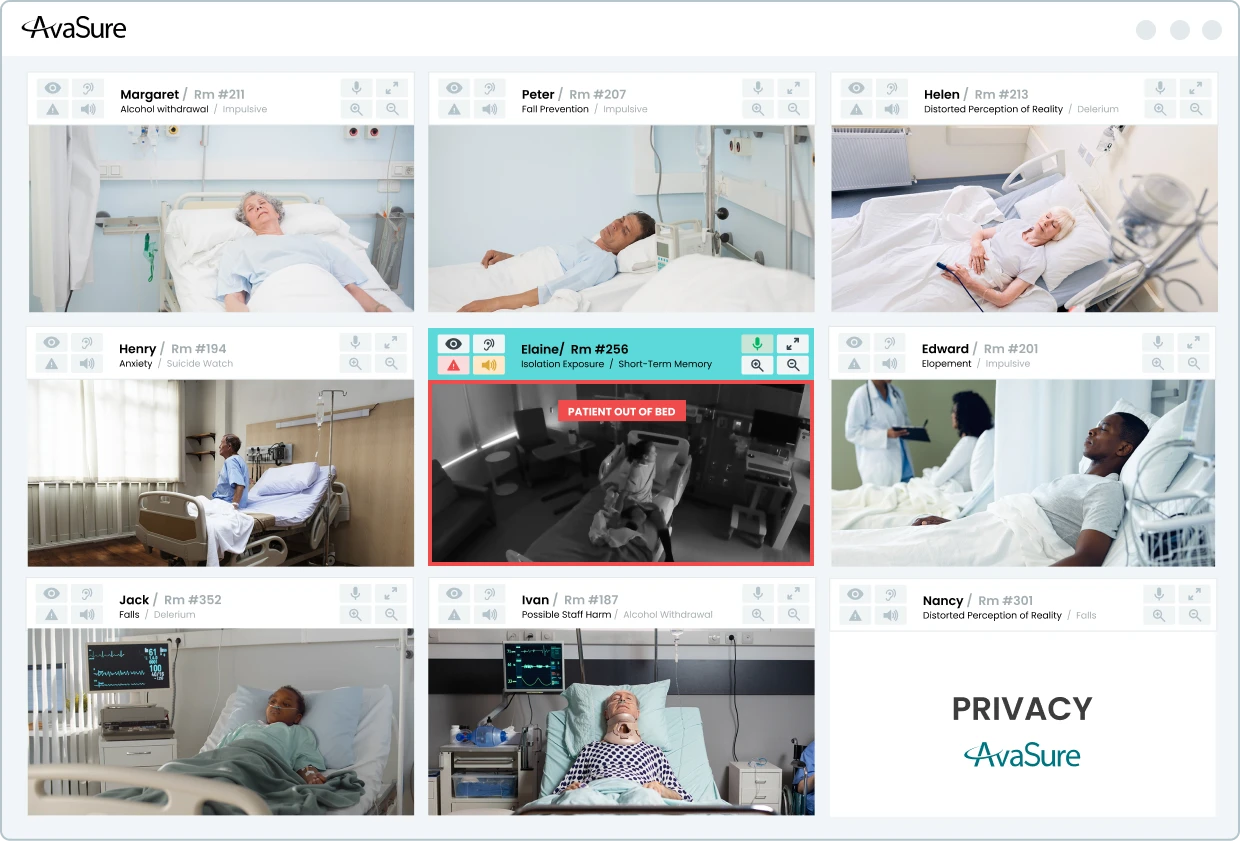
With AvaSure’s virtual care platform for virtual sitting, a Virtual Safety Attendant (VSA) can oversee up to 16 veterans at once, using an intelligent, AI-enabled platform to identify patients at risk of a fall and verbally redirect them back to safety. If necessary, the VSA can issue a stat alarm, a loud, in-room alarm that draws nearby caregivers to the room in an emergency with an average response time of 20 seconds2. Freeing up CNAs and nurses from one-to-one sitting allows them to move back to the bedside for more direct patient care activities. 

An important aspect of virtual sitting is assessing patients individually to determine whether virtual sitting will meet their needs. Conditions typically monitored by virtual sitters include general safety concerns, such as high fall risk, drug or alcohol withdrawal, confusion, agitation, and elopement risk, and failure to follow safety instructions, such as leaving the unit without notifying staff. 

Success Stories in Virtual Sitting Implementation for VA Fall Prevention 

AvaSure’s virtual care platform is implemented in 45 VA hospitals across the country. For more success stories, check out the whitepaper on VA Fall Prevention

Fayetteville VA Hospitals 

Fayetteville VA hospitals were recently recognized with the 2024 VA Excellence Award when their virtual care program soared to 80% utilization in just six months, highlighting their strong leadership, organization, and commitment to success. Their journey serves as an inspiring model for other VA facilities, proving that with the right strategies and dedication, significant progress can be achieved in a short time. 

VA North Texas 

Facing labor shortages and escalating costs, VA North Texas implemented a virtual sitting program. At the heart of the program is a centralized monitoring hub, allowing 4 virtual safety attendants to oversee a total of 48 patients to reduce falls.  

Since implementing the program, VA North Texas freed up bedside care teams for direct patient care and decreased 1:1 sitter usage, saving the program an average of 83 full-time equivalents per month – an annual savings of $3.4 million. The efficiency gains are substantial, with costs per virtual sitting hour reduced to $3.05 compared to $26 for one-to-one sitters. VA fall rates plummeted by nearly 20%, well below national averages. Learn more about VA North Texas Program 


For health systems, one-to-one sitters represent a costly drain on resources that do little to improve patient safety. With virtual sitting, health systems such as VA’s have prioritized fall prevention and created better patient outcomes while delivering staff cost savings that can be invested back into direct patient care. 

AvaSure’s Intelligent Virtual Care Platform is deployed in 45 VA hospitals across the country, helping make significant strides in VA fall prevention and patient safety. By leveraging technology and data-driven insights, these hospitals are creating a safer environment for veterans and their caregivers.  

Interested in reading more? Download the whitepaper to learn:  

  • How to reduce falls by nearly 20% 
  • Ways to improve staff efficiency & satisfaction 
  • The top 4 adverse events prevented in VAs 
  • More success stories from VA Hospitals 

References

1 Sentinel Event Data Summary | The Joint Commission. (n.d.). www.jointcommission.org. https://www.jointcommission.org/ resources/sentinel-event/sentinel-event-data-summary/
2 Analytics – AvaSure. (2024, April 8). AvaSure. https://avasure.com/analytics/

How AI in healthcare could change patient care

ai in healthcare, virtual sitting,

In recent memory, no technology has so quickly penetrated the cultural zeitgeist as artificial intelligence (AI). At an ever-increasing pace, AI is being hailed as the hero capable of fixing everything from world hunger to climate change. Companies across the globe are racing to utilize AI to automate, simplify, and rationalize manual tasks across every industry, including healthcare.  

At the same time, healthcare has been grappling with tremendous cost pressure & staffing shortages for years. Over the past decade, hospitals have focused on utilizing technology to help drive significant change through: 

  1. Digitization of documentation and communication tools
  2. Consolidation of health systems in search of economies of scale 
  3. Virtualization of traditional care models to include remote caregivers and stakeholders 

In 2020, the COVID-19 pandemic poured gasoline over the fire of those pressures; and hospitals quickly implemented changes to adapt.  In many cases, integrated tools are not delivering the simplicity needed; shared data is not delivering the actionable insights that caregivers need; and automation is not allowing care teams to scale that care to an increasing number of patients.   

Clearly, there’s no “silver bullet” to remedy all the chaos and pressure.  Many key plays need to be run, integrations must deepen, technology needs to be more open to 3rd party access, and virtual experience needs to seamlessly merge with care workflows.   

How can AI in healthcare help?

As an industry, we seem to latch on to the hope of the next big thing. Waves of opportunity have come our way with Meaningful Use, Actionable Insights, multi-use case infrastructure like Real-Time Location Systems (RTLS), and more. What does that mean for AI? How can we focus our efforts to soak up as much of the wave as it rolls in?   

There are a few key questions we need to answer in determining if utilizing AI in healthcare will truly be the savior it needs, or if it’s just another passing technology fad that won’t deliver on its promises:  

What is AI? 
What use case examples of AI in healthcare are primed for change? 
What risks need to be top of mind when implementing AI in healthcare settings? How can those risks be mitigated? 

What is AI? 

Let’s tackle what that term, “artificial intelligence,” means.  Promising examples of AI in healthcare settings include references to the following technologies:  

  • Natural Language Processing (NLP) – helps take data from unstructured to structured 
  • Conversational Bots – virtual agents that manage conversations with patients via text, IM, etc. 
  • Predictive analytics – mines data to plug into algorithms that project things like patient risk 
  • Ambient Listening – listens to live audio to turn conversations into notes or identify risks 
  • Computer Vision – watches live video to identify patterns or risks 
  • Remote Patient Monitoring – uses data from medical devices to anticipate risks or care needs 

What use case examples of AI in healthcare are primed for change?

Despite AI’s newfound popularity, some technologies on the list above have been around in healthcare for years. NLP is being used to turn dictated notes into actionable work, like orders, and Predictive Analytics are employed by Populational Health technologies to help target specific populations for focused care based on their risk.  

So, if AI in healthcare isn’t anything new, why is it so prevalent in today’s industry discussions? For one, the underlying technology has changed and improved very quickly, making it a more powerful tool. For another, the volume of data needed to improve AI models is becoming more manageable to achieve. As a perfect example, ChatGPT-4 took social media by storm as people began asking for AI to produce legal contracts, bedtime stories for their kids, and essays for homework assignments. Mere weeks later, new forms of this AI were appearing as Chrome extensions that were already better, faster, and stronger than the ones before. The more AI is used, the more valuable it will become because every use provides meaningful learning. 

All this progress makes the potential for AI in healthcare more optimistic. Experts agree that, among other things, AI will be key in supporting the push towards more impactful virtual care models. More specifically, this will be achieved through the use of predictive analytics, computer vision, and ambient listening.  

During the time that AI entered the conversation, two other important advancements also happened: 

  • Technology continued to get faster, stronger, and cheaper. Cameras, microphones, speakers, and other equipment necessary to facilitate virtual interactions are now available in more patient rooms than ever before. 
  • The COVID-19 pandemic opened patients’ and caregivers’ eyes to virtual care, making these interactions more trusted and commonplace. 

AI can help turn heavily user dependent devices into seamlessly integrated, clinical workflow-enabling devices. We are entering a moment where the true potential of virtual care is being unlocked, facilitated by the growing prospect of the availability of an AI-enabled virtual care device in every hospital room.  

What risks need to be top of mind when implementing AI in healthcare settings?  

While one may not be worried about what’s at stake when using AI to help write a bedtime story, the stakes of healthcare are much higher. AI-enabled devices in every hospital room could bring virtual care to life, but there are important questions to consider. 

  • Are cameras and speakers now the equivalent of a door to the patient room?  
  • Who decides when the door should be open or closed?   
  • How do patients, staff, and visitors know that the doors are open, and what does that mean?   
  • What happens if multiple virtual care team members try to open that door and walk in at the same time?   
  • Which patients do, or do not, qualify for virtual care models and participation? 
  • The list goes on…. 

So, is AI just a short-lived buzzword, or are there clinically relevant use cases that you can take advantage of? Industry experience tells us to avoid getting our hopes up, else our belief in a healthy future might be dashed. We now know that failure is not an option. If we can all see the challenges for what they are and take a mindful approach to what and how we implement, then AI in healthcare may be the ‘silver bullet’ we’ve been promised for years. 

The hospital room of the future: Episodic™ Care solution powered by AvaSure’s Intelligent Virtual Care Platform 

virtual care platform

Caregivers can now provide thoughtful care from anywhere with a fast, reliable two-way connection that supports virtual care for admission, discharge, specialty consults, rounding, and more.

AvaSure Episodic™ Solution

Virtual care is essential to adapt

As healthcare systems grapple with rising costs, staffing shortages, and increasing complexity of patient care, the urgency for change is at an all-time high. With a staggering 22.7% turnover rate among staff, hospitals struggle to uphold their commitment to patient care. Amidst these challenges, there’s a growing recognition that digital transformation measures are essential.

Hospitals across the world are adopting virtual care solutions to alleviate the mounting pressures facing healthcare systems globally. This signals a brighter future for both patients and healthcare providers alike. Using technology to facilitate remote consultations, monitoring, and support, virtual care offers a pathway toward improved staff satisfaction, enhanced patient experiences, better health outcomes, and more efficient hospital operations. With the right virtual care platform, hospitals can redefine patient experiences and revolutionize the way healthcare services are delivered.

The path to virtual care isn’t always clear

As hospitals and health systems embark on the journey toward the hospital room of the future, the road is fraught with obstacles, requiring hospitals to confront complex issues head-on. Historically, hospitals have adopted point solutions to address specific virtual care needs, resulting in fragmented systems and siloed approaches. Now, there is a growing recognition of the need to consolidate these disparate solutions into integrated virtual care platforms that can scale across the entire enterprise. Such endeavors require a significant investment, posing financial constraints for resource-strapped healthcare institutions. Without a clear adoption model that demonstrates ROI, hospitals struggle to build the business case for virtual care, further complicating the decision-making process. 

Amidst this backdrop, hospitals are piloting virtual care platforms, each with varying levels of success and clinical adoption. The stakes are high, as the initial impression of these pilots can significantly influence the trust that caregivers have in these technologies to deliver on their promise. Hospitals must tread carefully, ensuring that their chosen solutions and partners not only meet the clinical needs of their patients but also garner widespread acceptance and support from healthcare professionals. Support from clinical, IT, and finance departments paves the way for successful implementation and integration into routine care delivery practices.

Episodic™ Care solution powered by AvaSure’s Intelligent Virtual Care Platform

Step into the hospital of the future with AvaSure’s new virtual care solution, AvaSure Episodic. Designed in close collaboration with clinicians and technical experts, AvaSure Episodic delivers a reliable two-way video solution designed to scale to the entire enterprise. 

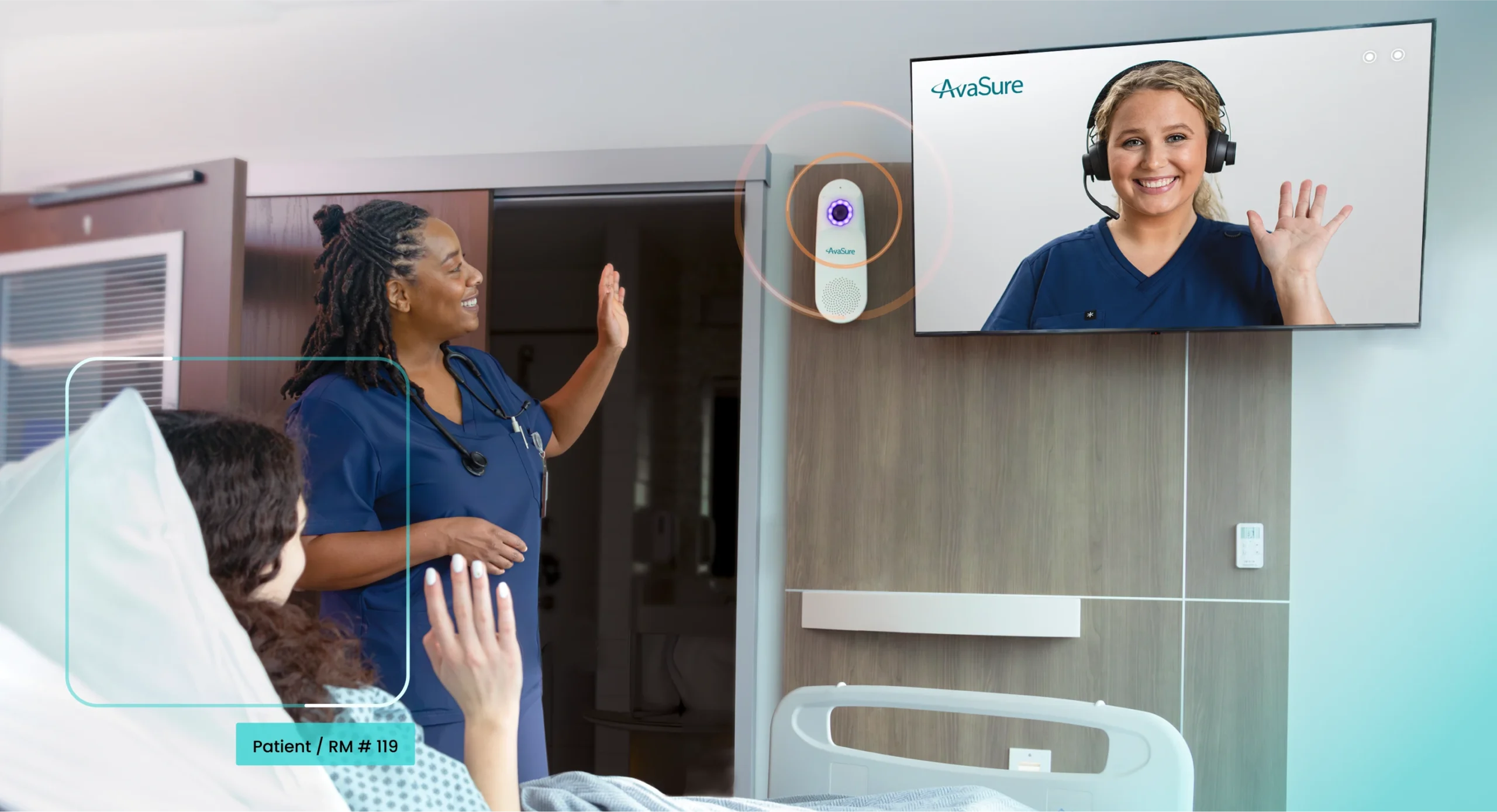
With the AvaSure Episodic solution, caregivers gain full control over the quality of remote, consultative patient interactions. It enables two-way video with group calling and polite entry, allowing for specialty consults, admitting and discharging patients, rounding, and more. Virtual care with the Episodic solution frees up time for nursing and support staff, enables seamless remote nursing workflows, and allows collaboration with specialists across the country. With AvaSure, clinicians can achieve more without stretching themselves thin.

Highlights: 

  • Group calling to include multiple parties: Care teams can easily invite family members, interpreters, caregivers, and consulting specialists from multiple locations to join a group session, saving time and making conversations more efficient.
  • Polite entry to patient rooms: Caregivers respect patients’ privacy by notifying patients before entering the room virtually with a doorbell chime, allowing them time to accept the call.  
  • Web-based access: Neither caregivers nor families need to download anything – all access to episodic care sessions is delivered via a web browser, whether on mobile or desktop.
  • Fast, reliable two-way video: Clinicians admit and discharge patients remotely, engage with them on rounds, connect with specialists in other locations, and provide training and mentoring to other staff members using portable, flexible devices with high-fidelity cameras.
  • Integration with Epic: Caregivers can easily launch virtual patient visits from Epic without disrupting their workflow, creating a seamless experience. 

The ability for a variety of caregivers to connect with a patient, whether it is a nurse, physician, specialist, or case manager, opens a whole realm of possibilities to drive better patient experience, more efficient operations, and reduced burden on bedside staff. AvaSure’s Intelligent Virtual Care Platform allows healthcare teams to seamlessly integrate in-person and virtual caregivers, promoting continuity of care and ensuring treatment plans are tailored to individual needs. Interpreters and family members can also participate in virtual group interactions to simplify communication. By leveraging AvaSure to involve a diverse range of caregivers in patient care, healthcare organizations can optimize resource utilization, streamline workflows, and alleviate pressure on frontline staff, ultimately enhancing the quality of care and patient outcomes.

The AvaSure Episodic solution can support a variety of virtual care workflows for virtual nurses, physicians, specialists, and other caregivers, including:

  • Admission and discharge documentation: Virtual caregivers streamline the admission and discharge documentation process by securely reviewing, capturing, and updating patient records remotely. This reduces administrative burden, minimizes errors, and ensures accurate and efficient documentation, enabling smoother transitions of care for patients.
  • Patient education: Patients can benefit from virtual education sessions delivered by healthcare professionals, empowering them with knowledge and resources to better understand their conditions, treatments, and self-care strategies, decreasing the risk of readmissions. 
  • Novice nurse mentorship: Novice nurses receive guidance, feedback, and support from experienced mentors remotely, often offering a second set of eyes for high-risk medications or patient assessments. Mentors can observe, assess, and provide tailored coaching to help novice nurses develop clinical skills, confidence, and competence in their practice, ultimately improving patient outcomes and enhancing the overall quality of care delivery.
  • Specialty consults: Care teams can easily connect with specialty consultants through virtual care platforms, enabling timely consultations and interdisciplinary collaboration, ensuring that patients receive the most appropriate and effective care tailored to their needs.
  • Proactive rounding: Virtual rounding enables care teams to conduct proactive check-ins with patients remotely, ensuring ongoing monitoring of their condition, progress, and satisfaction. Through video conferencing or virtual visits, healthcare providers can address any concerns, provide emotional support, and reinforce treatment plans, promoting continuity of care and patient-centered communication.

One platform can change everything 

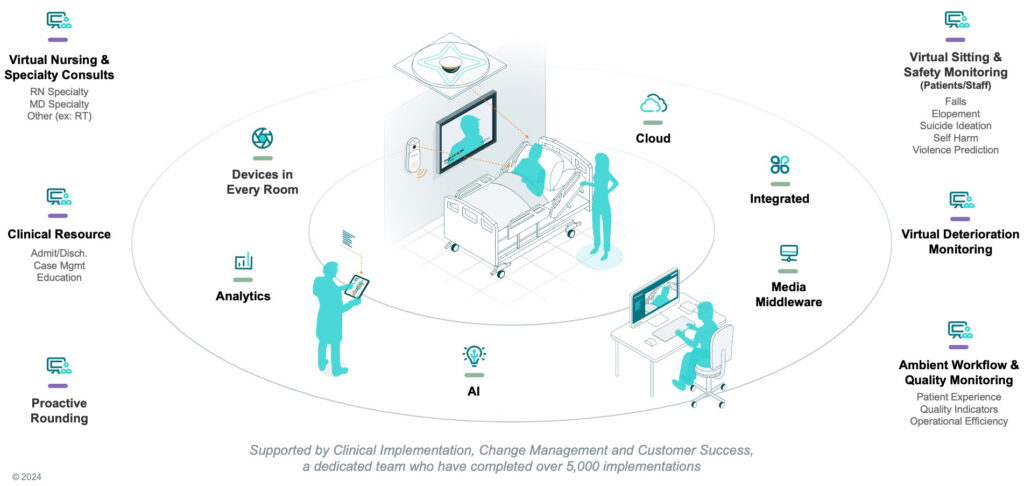
The ideal virtual care platform must meet the criteria set by both clinical and IT leaders. In addition to essential hardware and monitoring software, today’s virtual care platforms must meet increasingly high enterprise-level IT standards. They should operate on open, scalable infrastructure to seamlessly integrate with existing systems, ensuring minimal downtime and optimal connectivity for care teams. They should include robust analytics and an intelligence layer for generating clear, measurable outcomes, along with AI capabilities to enhance patient safety and alleviate the workload of virtual staff. Most importantly, access to comprehensive support is essential, particularly for clinical teams navigating change management and envisioning a sustainable virtual care strategy. That’s a tall order. 

virtual care platform

AvaSure is the only virtual care platform that fulfills each of these crucial requirements, continuously innovating while demonstrating a proven record of clinical outcomes. Hospitals use AvaSure for AI-powered continuous monitoring, episodic care, and building a greater ecosystem of solutions and workflows that transform the hybrid care delivery model. Our team of experienced nursing and healthcare experts collaborate with customers to shape a vision for the future and bring it to life. 

One platform can change everything. AvaSure’s Intelligent Virtual Care Platform combines continuous monitoring and episodic care solutions designed to free up more time for nursing and support staff, enable seamless remote care workflows, and ensure better outcomes for patients. 

Read the press release.