Three Teams. One Mission. A First-of-Its-Kind Virtual Care Model
CHARLESTON, S.C., June 2, 2026 – Anuvia Prevention & Recovery Center, VirtuAlly, and AvaSure have successfully launched a purpose-built virtual nursing program designed specifically for the unique clinical environment of substance use and behavioral health treatment.
Substance use and residential behavioral health programs face the same nationwide nursing shortages as acute care, often with fewer resources and tighter regulatory oversight. This virtual nursing program extends access to experienced nurses 24/7, strengthening client safety, supporting regulatory compliance, and enabling cost-effective care delivery without expanding on-site staffing.
This go-live marks a first: a virtual care model intentionally designed for a residential treatment setting, where client complexity, strict regulatory requirements, and the realities of a nonprofit healthcare environment demand far more than an off-the-shelf approach.
Anuvia, a CARF-accredited nonprofit serving the Charlotte, North Carolina region, provides a comprehensive continuum of substance use disorder and behavioral health treatment for adults, adolescents, and veterans. Services include residential treatment with withdrawal management, medication-assisted treatment (MAT), medication management, outpatient programs for substance use disorder and mental health services, and community-based behavioral healthcare. Integrating virtual nursing into an environment like Anuvia’s required all three organizations to think differently, collaborate closely, and address challenges that had not previously been encountered in this type of care setting.
Why This Setting Is Different
Acute hospital virtual nursing programs are becoming increasingly common. But Anuvia is not a hospital, and that distinction matters.
Substance use treatment facilities operate under a different regulatory framework. In North Carolina, residential programs are governed by stringent state guidelines and accredited by CARF (Commission on Accreditation of Rehabilitation Facilities), an internationally recognized accreditor for health and human services organizations. Individuals served at Anuvia are navigating complex physical and emotional recovery journeys that often involve substance use and behavioral health treatment, medication-assisted treatment, and management of chronic physical and behavioral health needs. The care provided must be highly individualized, relationship-centered, and designed to support long-term wellness and recovery.
Deploying virtual nursing in this environment required rethinking workflows, redefining how on-site and virtual teams collaborate, and building clinical processes with regulatory compliance embedded from the start. Not retrofitted later.
It also required a cost-conscious approach. As a nonprofit, Anuvia is committed to directing resources toward client care. Virtual nursing created a path to strengthen clinical support without expanding in-house staffing, but only if the model was designed with that reality in mind.
How the Three Teams Built Something New
The foundation for this program was established before any technology was selected.
VirtuAlly’s clinical and implementation teams worked alongside Anuvia’s leadership and frontline staff to understand the problem before designing the solution. This included assessing staffing realities; mapping nursing use cases specific to residential substance use treatment; identifying workflow gaps; and defining the clinical, operational, and compliance requirements that guided every decision.
AvaSure was selected as the virtual care platform partner for this deployment, bringing a scalable, enterprise-ready foundation. By leveraging an established technology platform and aligning it with VirtuAlly’s clinical workflows and program design, the teams were able to accelerate deployment without starting from scratch. Together, VirtuAlly’s clinical expertise and AvaSure’s platform enabled a solution tailored to Anuvia’s environment.
The result is a virtual nursing model that supports 24/7 clinical availability across three critical functions:
- Admission Screening of Clients: VirtuAlly nurses provide around-the-clock screening to ensure individuals are medically appropriate for admission before entering the residential program.
- Medication Review at Admission: During admission, virtual nurses review and verify client-provided medications to support accurate documentation and ensure individuals enter the program with a clear and complete medication profile.
- Triage of Acute Medical Need: When urgent clinical situations arise, VirtuAlly nurses provide immediate virtual triage support, extending the clinical decision-making capacity of Anuvia’s on-site team at any hour.
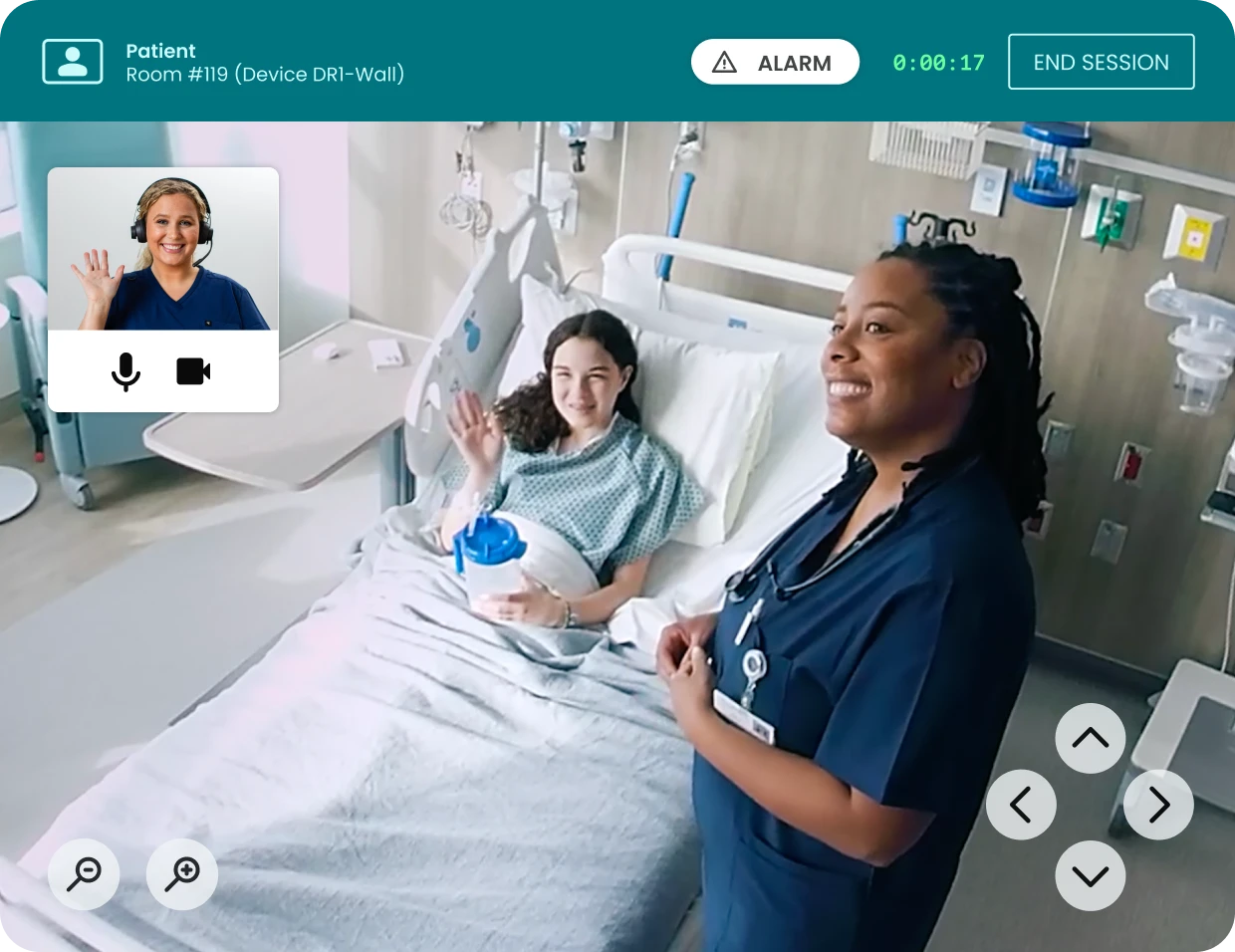
AvaSure’s virtual care and smart room platform enables real-time clinical intervention through two-way virtual care devices and virtual visit capabilities, alongside continuous observation, AI-powered fall prevention, and elopement detection.
One standout innovation developed through this collaboration is virtual medication verification. VirtuAlly nurses support on-site staff by reviewing client-provided, home medications, helping ensure everyone arrives with the medications needed for a successful treatment stay. This process focuses on medication inventory and documentation, supporting accuracy and continuity of care.
Throughout implementation, VirtuAlly also provided consultative support beyond standard deployment, helping Anuvia navigate program changes, adapt to evolving service definitions, and ensure workflows align with the expectations of the North Carolina Board of Nursing, CARF, and state oversight bodies.
Looking Ahead
“Behavioral health and addiction treatment has been underserved by virtual care for too long. What we built with Anuvia and AvaSure proves that a clinically rigorous, purpose-built virtual nursing model works in this setting. That matters for Anuvia’s clients today, and for every organization in this space wondering if it’s possible.” — Joe Weschler, CEO, VirtuAlly
“Anuvia’s approach to bringing together the right solutions to address a complex challenge demonstrates how innovation and outcomes must go hand in hand. By aligning technology with a clearly defined care model, they’ve improved client safety, enhanced quality of care, supported their teams, and increased operational efficiency. This is the future of virtual care. Scalable solutions that deliver both clinical impact and economic value.” — Adam McMullin, CEO, AvaSure
VirtuAlly’s customer success team remains actively engaged with Anuvia to refine workflows, evolve service delivery, and build toward measurable outcomes in client safety and care quality. As the program matures, all three organizations plan to share learnings that can help inform how the broader behavioral health and addiction treatment sector approaches virtual care.
The work at Anuvia is a proof point, not a ceiling. As virtual care continues to expand beyond acute settings, this program offers a replicable model for behavioral health and addiction treatment organizations looking to strengthen clinical capacity, meet regulatory standards, and deliver better outcomes for the people they serve.
About VirtuAlly
VirtuAlly is the virtual clinical care team built to extend the capabilities of bedside nurses, strengthen patient safety, and deliver outcomes that health systems can measure. Founded at MUSC, VirtuAlly is one of only three federally recognized Telehealth Centers of Excellence in the country and among the first virtual nursing organizations to achieve Joint Commission Accreditation. VirtuAlly delivers virtual nursing, telesitting, remote patient monitoring, and telemetry, purpose-built for the real demands of today’s care environment. To learn more, visit virtually.io.
VirtuAlly Media Contact:
Megan Pino
412-999-2301
Mpino@virtually.io
About AvaSure
AvaSure® is an intelligent virtual care platform that healthcare providers use to engage with patients, optimize staffing, and seamlessly blend remote and in-person care at scale. The platform deploys AI-powered virtual sitting and virtual nursing solutions, meets the highest enterprise IT standards, and drives measurable outcomes with support from care experts. AvaSure consistently delivers a 6x ROI and has been recognized by KLAS Research as the #1 solution for reducing the cost of care. With a team of
15% nurses, AvaSure is a trusted partner of 1,200+ hospitals with experience in over 5,000 deployments. To learn more, visit www.avasure.com.
AvaSure Media Contact:
Rachel Ford Hutman
301-801-5540
Rachel@fordhutmanmedia.com