More than 20 years after the publication of the Institute of Medicine’s seminal report “To Err is Human” — which sought to cut preventable medical mistakes by half — progress toward safer care has been slow. The Agency for Healthcare Research and Quality reports that public and private efforts reduced hospital-acquired conditions by 13 percent from 2014-17, helping to prevent more than 20,000 deaths and saving $7.7 billion in healthcare costs. That’s welcome news, but given that there are as many as 400,000 preventable deaths from medical mistakes each year, we wonder why more health systems aren’t rushing to implement proven safety and quality solutions…
When a patient in the hospital requires 24/7 monitoring — due to a risk of falling, for example — someone must continually stay in the patient’s room to ensure the patient’s safety. The need for this type of service has been rising at Johns Hopkins Bayview Medical Center because of the number of patients with a psychiatric condition or addiction, says Andy Magalee, director of nursing at the medical center. To address the demand, the hospital adopted remote video monitoring technology to create the TeleSitter® program.
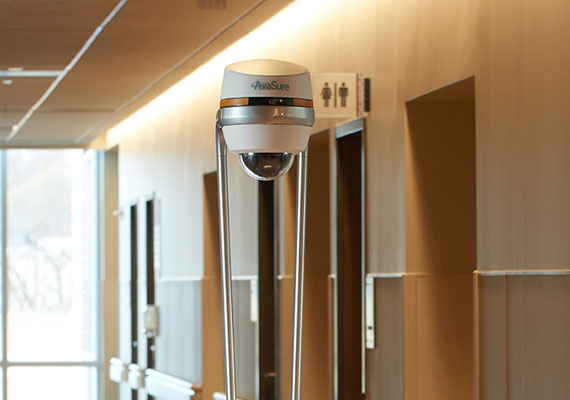
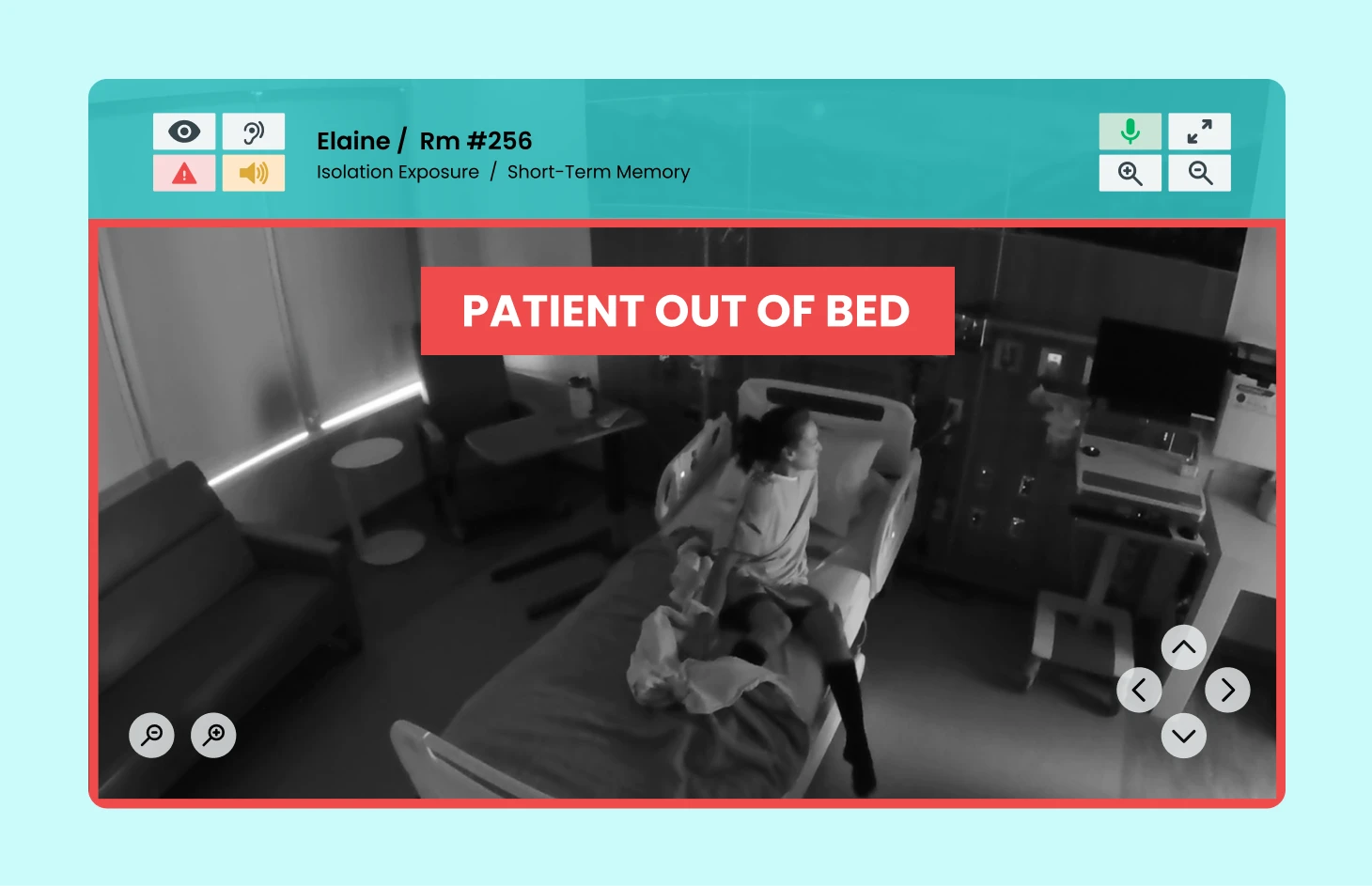
The TeleSitter® program, part of the Office of Johns Hopkins Telemedicine, enables one clinical technician to monitor a dozen patients simultaneously. Portable camera units mounted on rolling IV-like poles provide live video and auditory feeds from the patients’ rooms to a central monitoring screen, where a clinical technician can watch all the monitored patients at once.
If the patient attempts to get out of bed, the clinical technician can communicate with the patient using a two-way speaker on the camera to ask the patient to wait for a nurse to arrive.
“During a small, six-week pilot test of the TeleSitter® program, there were no falls with injuries,” says Ronald Langlotz, director of nursing at The Johns Hopkins Hospital.
To ensure a patient is a good candidate for the TeleSitter® program, a patient sitter stays in the room for the first two hours of monitoring. If the patient’s nurse finds no reason for the sitter to remain in the room — such as the patient pulling at the lines connected to him or her, for example — then the sitter leaves and the patient is monitored remotely.
Between July 2017 and June 2018, Johns Hopkins Bayview saved more than $1 million through the use of technology and clinical technicians. In addition to Johns Hopkins Bayview and The Johns Hopkins Hospital, Howard County General Hospital has also implemented the TeleSitter® program.
“The success in the program is the people behind the camera,” says Langlotz. “I couldn’t be more pleased with the clinical technicians. They really own it.”
AvaSure’s AvaSys Solution lowers costs, improves patient safety and enhances staff engagement.TeleSitting® is an evidence-based, data-driven, and very cost-efficient solution to provision care for patients in need of continuous observation. Read the full article to learn more.
ALBANY — The Phoebe Putney Memorial Hospital Board of Directors got its first look Wednesday at a new piece of technology meant to help prevent patient falls.
The AvaSys Telesitter® program, which has 12 units between the main hospital and Phoebe North, works by putting more eyes on patients.
Equipped with an infrared camera and two-way audio, it is set up in rooms of patients identified as high risk for falls. One technician can monitor live feeds on the units from those rooms at a central station.
If a patient tries to get out of bed, the observer can interact with the patient with a reminder to wait for assistance or sound an alarm for immediate staff attention. Patients in imminent danger receive an alarm, which signals the staff to head quickly to the patient’s room.
“Within seconds, someone is in the room,” April Little, a central staff manager for Phoebe Putney Health System, said of the alarm.
Posted on August 21, 2017 by Olivia Phillips - Uncategorized
LAKE CHARLES, LA (KPLC) – Patient safety is paramount in hospital settings and traditionally, it has taken one-to-one care 24 hours a day for some of the most at-risk patients.
That can tie up skilled nursing staff from other demands and that is why a new video monitoring system has been launched at Lake Charles Memorial Hospital.
It is called the AvaSure Telesitter® Solution and through a two-way audio system, video camera, and central monitoring station, Memorial nurse manager, Tressy Bergeron, is able to keep an eye and ear on up to 12 patients at one time.