The Rural Health Transformation Program (RHTP) provides $50B in CMS funding (2026–2030) to strengthen rural hospitals.
States submitted transformation plans prioritizing technology, workforce resilience, and AI.
Virtual nursing, TeleHealth, and tele-specialty consults directly align with RHTP goals.
Hospitals can use RHTP funds to reduce falls, overtime, sitter costs, and specialty care gaps.
Sustainable virtual care models reinvest efficiency savings beyond federal funding.
What is the Rural Health Transformation Program (RHTP)?
Rural and community hospitals face critical workforce shortages and financial distress, with nearly half operating at a loss as of 2023, according to an AHA analysis of RAND Hospital Cost data. To address these pressures and improve care quality, Congress established theRural Health Transformation Program (RHTP)under the 2025 One Big Beautiful Bill Act (OBBBA). This $50 billion Centers for Medicare & Medicaid Services (CMS) initiative (FY 2026–2030) provides $10 billion annually to strengthen rural healthcare and offset projected funding gaps.
How CMS Administers RHTP Funding
States are the direct recipients and had to submit a Rural Health Transformation Plan for CMS approval. Half of the funding is divided equally among participating states—guaranteeing at least $100 million per year for five years if all states join—while the other half is distributed via a CMS formula. This massive pool supports infrastructure, technology, and workforce improvements for nearly 1,800 rural hospitals and 60 million residents.
How Critical Access Hospitals (CAHs) Benefit from RHTP Funding
While all rural providers are eligible, the nation’s 1,350 Critical Access Hospitals (CAHs) stand to benefit most, particularly in the Midwest and states like Texas, Iowa, and Kansas. By investing in these hospitals, the RHTP aims to prevent closures, preserve essential services like emergency and maternity care, and improve health outcomes in rural America.
Contact AvaSure to discuss how you can use RHTP funding for virtual care.
How can telehealth and virtual care benefit rural hospitals?
RHTP applications from numerous states have revealed a priority among rural hospitals: the use of telehealth and virtual care to help extend and improve care where things like specialty care are often unavailable.
By integrating telehealth, rural facilities can bridge the “specialty gap,” allowing local doctors to consult with world-class neurologists or cardiologists in real-time without transferring the patient. This “keep it local” approach not only improves patient outcomes during emergencies but also stabilizes the hospital’s finances by retaining admissions and reducing the reliance on expensive traveling staff. In addition, by leveraging AI and virtual care, rural hospitals can expand local access and boost financial sustainability while delivering higher-quality care. These innovations do more than just improve patient outcomes and ROI; they actively reduce safety risks like falls, alleviate staff burnout, and foster collaborative models of care. See how Hackensack Meridian Health improved nurse satisfaction and patient outcomes through virtual nursing.
How do states plan to use their funding for the Rural Health Transformation Program (RHTP)?
States submitted plans in December 2025 that had to meet specific criteria defined by CMS. Funding for these plans was released in January 2026. The plans had to address how hospitals will:
Prioritize the use of new and emerging technologies including AI to improve rural health outcomes
Improve access to care locally
Enhance quality metrics for rural patients
Foster partnerships (e.g. small hospitals collaborating with larger systems) and ensure financial stability of rural providers
Tackle causes of rural hospital closure
How can hospitals leverage RHTP funding?
1. Engage State RHTP Leadership
Coordinate with your state health department or Medicaid agency to include virtual care in your Rural Health Transformation Plan. Highlight its impact on workforce resilience and patient safety.
To strengthen your case, align the stated goals to the RHTP program and track them. The outcomes that AvaSure has benchmarked with partner hospitals with virtual care programs are:
72% improvement in 1:1 sitter usage
11.6% improvement in length of stay
26% improvement in RN overtime
30-50% improvement in falls
4. Build a Sustainable Model
Reinvest efficiency savings and improved performance outcomes to sustain virtual nursing operations post-RHTP funding.
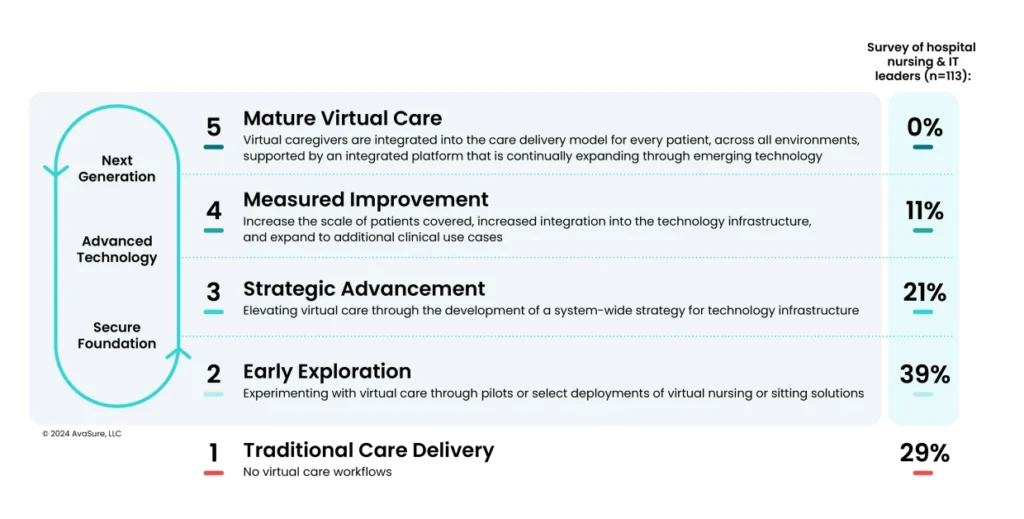
AvaSure’s maturity model provides a strategic roadmap for health systems to transition from initial pilots to a fully integrated virtual care delivery system. It serves as a vital framework for leaders to benchmark their current capabilities and identify the specific infrastructure and workflow milestones required to reinvest efficiency savings and sustain high-performance virtual nursing long after the conclusion of RHTP funding.
How AvaSure Aligns with the Rural Health Transformation Program
AvaSure, the industry leader in virtual nursing and continuous patient monitoring, helps hospitals extend nursing capacity, reduce falls and sitter costs, and enhance care quality through a proven operational model. AvaSure’s virtual care platform is fully aligned with RHTP’s focus on technology-enabled workforce transformation.
RHTP Funding Categories Supported by AvaSure:
Workforce development and modernization
Technology-enabled patient care and safety
Training and technical assistance
Quality and efficiency improvement initiatives
The Rural Health Transformation Program prioritizes initiatives that stabilize and modernize the healthcare workforce, improve patient safety, and enable sustainable operations in rural hospitals. AvaSure supports all three objectives by bringing virtual nursing and continuous observation into daily hospital operations:
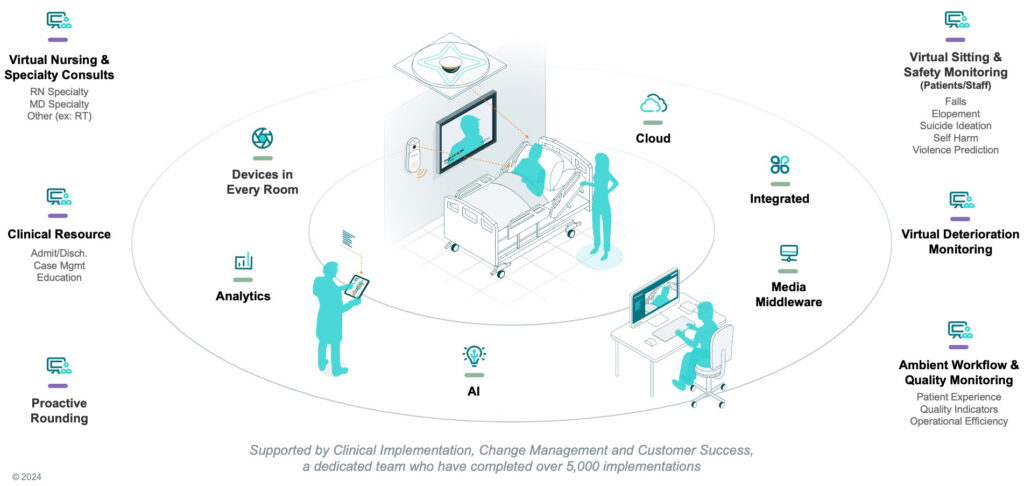
Virtual Nursing: Augments bedside teams with remote nurses who handle admissions, discharges, and patient education to reduce admin burden.
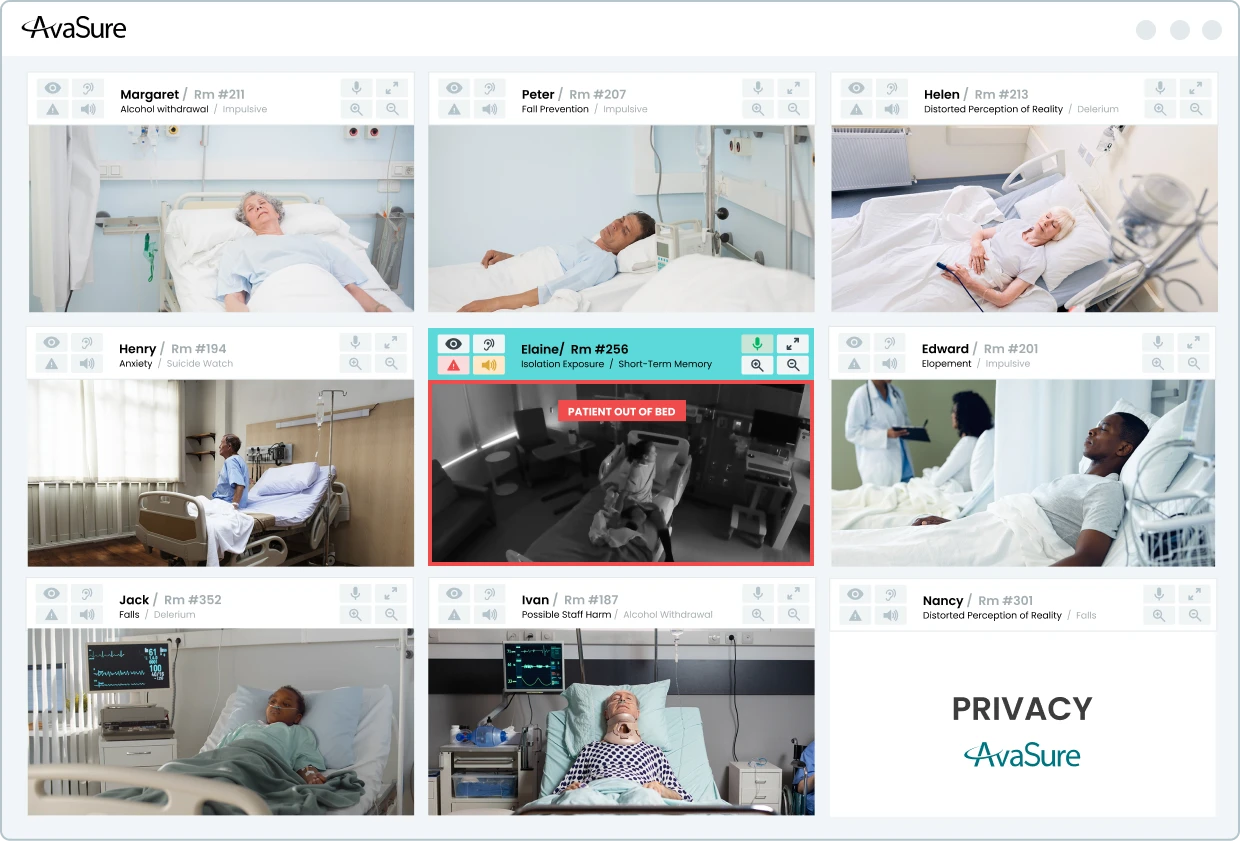
Continuous Observation (TeleSitting): Centralized video observation reduces falls, elopements, and 1:1 sitter costs.
Specialty Consults: Consult with specialists in another location to expand care without having to move your patient.
This in turn leads to benefits such as:
Workforce Flexibility: Reduces overtime, improves staff retention, and increases productivity.
Patient Safety: Delivers continuous monitoring and rapid response support.
Ultimately, access to care and physician specialists remains one of the most pressing challenges for rural hospitals, leading many to prioritize specialty health and telehealth consults in their strategic applications. To effectively remedy these gaps, it is essential to select a virtual care platform that leverages the specific partnerships necessary to bridge the distance between patients and specialized expertise.
How Can AvaSure Help?
AvaSure’s partnership with Equum Medical, a telehealth-enabled clinical workforce organization, will provide rural hospitals with easy access to virtual specialty consults. The company’s broad portfolio of services addresses the driving challenges of Access and Capacity for health systems, including multi-specialty telemedicine, critical care, virtual nursing, virtual sitter monitoring, and telemetry. Solutions include:
Tele-ICU and critical care support, including surge capacity and after-hours coverage
Virtual hospitalist support for nights, weekends, and hard-to-staff locations
Care coordination that helps reduce avoidable transfers, keep patients local, and support patient flow with integrated virtual nursing capabilities across care venues
These solutions strengthen financial sustainability while offering scalable, broadband-friendly technology specifically designed for the unique constraints of rural settings. Unlike typical telehealth partnerships that add separate point solutions, the integrated model runs on a single platform that many hospitals already use for virtual nursing and patient observation, paired with Equum’s physician and clinical programs.
Your RHTP Virtual Care Strategy
AvaSure equips rural hospitals with innovative virtual care and AI-powered solutions that expand local access, enhance care quality, and strengthen financial sustainability. By reducing adverse events like patient falls, easing workforce burdens, and fostering collaborative models of care, AvaSure helps rural providers meet and exceed the goals of the Rural Hospital Transformation Program.
Hospitals are under pressure to reduce preventable harm from falls, elopement, and other adverse events while maintaining a sustainable workload for clinicians. Camera-based monitoring and virtual sitting programs such as AvaSure’s Continuous Observation platform have already demonstrated that continuous observation can reduce falls and injuries, but human-only monitoring does not scale indefinitely. Many organizations are now exploring Artificial Intelligence to extend the reach of their teams, and to detect risk earlier than a human observer might be able to do consistently.
At AvaSure, we view Artificial Intelligence as an extension of the virtual care platform that more than 1,200 hospitals already use for continuous observation, virtual nursing, and specialty consults. Our goal is not to replace human judgement. Instead, we want to build behavior-aware monitoring that can recognize patterns associated with risk, surface those patterns to caregivers in time to intervene, and do so in a way that is technically sound, clinically grounded, and respectful of patient privacy.
This blog describes the design principles behind our Falls and Elopement Artificial Intelligence system. AvaSure leverages Computer Vision, a subset of Artificial Intelligence, to detect high-risk scenarios before an adverse event occurs. Our Computer Vision models perceive the hospital room environment by learning what situations are unsafe for patients. This allows us to demonstrate the clinical performance of our models made possible by our onboarding process for new hospitals. Built on Oracle Cloud Infrastructure (OCI), this cloud-based system provides a scalable foundation that extends beyond fall and elopement prevention into broader ambient AI applications.
What are the Challenges of Computer Vision Models for Falls and Elopement?
Falls and elopements rarely occur as single, isolated moments. They emerge over a sequence of behaviors. A patient may shift position in bed, sit upright, move to the edge of the bed, stand, and then begin to move away. However, there are challenges to building Computer Vision models that understand such behavior. Staff and visitors come and go, sometimes obstructing the view of the camera. Lighting changes over the course of the day and night, including the use of infrared lighting in low light situations. All these challenges are part of the design space, and a monitoring system that considers a single video frame at a time without regard to such confounding elements can miss much of this context.
An important way to adapt to these challenges is to select the right type of camera device. Choosing the right device for AI for patient safety also impacts how the system perceives the hospital room environment. AvaSure offers a variety of camera devices including Guardian Dual Flex, Guardian Mobile Devices, and Guardian Ceiling Devices. Guardian Dual Flex devices provide a fixed camera dedicated to Artificial Intelligence monitoring. Mobile units introduce variation in pan, tilt, zoom, and location within the room – each of which varies in layout across and within different hospital systems. Guardian Ceiling devices provide a different perspective compared to Dual Flex and Mobile devices.
AvaSure’s Computer Vision system and onboarding processes are built to adapt rather than assuming a single, fixed installation environment. Our current models for Falls and Elopement focus on understanding posture and presence over time while accommodating variations in lighting and environment. The system distinguishes the posture of the patient from lying in bed, sitting on the side of the bed, or standing. These states are evaluated over short time windows and combined with rules that relate them to risk. For example, a transition from lying to sitting on the side of the bed may be treated as an early warning, whereas a transition to standing unassisted may prompt a higher-severity alert.
How Does Falls and Elopement AI Perceive the Patient Room?
The Falls and Elopement models employ a three-layer approach to perceive conditions within the hospital room.
Lowest Layer: Detect whether there are people in the frame and estimate how many.
Middle Layer: When there is a single person in view, form an understanding of posture and location relative to the bed and other furniture.
Top Layer: Combine these posture estimates over time and apply rules that map temporal patterns to alerts.
This layered approach is intentional. Computer vision research has shown that models built only around pose estimation can struggle with common conditions in clinical rooms, such as occlusions from blankets and equipment, low light, and cluttered backgrounds. By combining person detection with semantic posture classification and temporal reasoning, we maintain flexibility in camera hardware while capturing clinically meaningful patterns in the room.
The temporal aspect is central to how the system works. Rather than categorizing each frame in isolation, the models consider short windows of behavior and pay attention to transitions. A single frame showing a patient near the edge of the bed may not be sufficient to decide whether they are attempting to stand or simply shifting position. A sequence of frames that show a consistent movement from reclined to upright to standing is more informative. Alerts are based on this kind of sequence-aware understanding rather than a momentary snapshot.
AvaSure designs for known sources of variability. Mobile cameras introduce changes in viewpoint and zoom as they are repositioned. Different rooms may be arranged in mirror images, with beds and bathrooms on opposite sides. Lighting can range from bright daytime scenes to low-light conditions at night. During model development and onboarding, we deliberately include these variations so that the system can learn to interpret similar behaviors across a range of visual conditions.
How does AI for Patient Safety Learn Real-World Clinical Complexity?
Computer Vision models learn by being fed many examples of different situations. For example, these could be labeled as “a patient lying in bed” or “a patient standing near the side of the bed”. The learning (or training) process then iteratively adjusts the model parameters based on how well the model at that iteration correctly predicts the situation associated with a given example. This process repeats until the model performs well enough. There are several methods for capturing data for training, including having actors stage scenes and having computers generate synthetic scenes by rendering life-like situations.
However, models trained only on staged scenes and synthetic data tend to perform best on those same controlled scenarios. Real hospital rooms are more complex. Patients vary widely in demographic, mobility, and behavior. Equipment is added and removed. Staff and visitors move through the field of view in unpredictable ways. To build models of AI for patient safety that can handle this complexity, we need to learn from images that reflect it. At the same time, patient identity and privacy must be preserved.
AvaSure maintains a patent-pending patient anonymization system that allows us to incorporate real-world imagery into training and evaluation without retaining identifiable visual information. The system applies transformations that remove or obscure personally identifiable features and present them to a human reviewer. The reviewer confirms that anonymization is complete and assigns labels describing the posture and relevant contextual details. Only after this confirmation do the frames enter curated data sets used for training and for measuring performance in production.
The system captures frames concentrated around ambiguous or clinically relevant situations rather than random samples of uneventful periods. This makes them particularly useful for improving model performance for video cases where decisions are hardest.
Precision vs Recall: Which Metrics Matter Most for Clinical Success?
When evaluating models in safety-critical domains, accuracy alone is not sufficient. Falls and elopements are relatively rare events compared with the number of hours of observation across a hospital. A system can achieve high overall accuracy by correctly labelling long periods of low-risk behavior yet still miss important events or generate more alerts than staff can reasonably handle.
For this reason, AvaSure frames performance in terms that reflect the realities of clinical operations. Precision captures how often an alert corresponds to a meaningful event. Recall captures how often the system detects an event when it occurs. The F1 score combines the two into a single measure that balances false positives and missed detections. These metrics tell us how often the system asks for attention when it is truly warranted and how often it remains silent when it should speak up.
In practice, different hospitals and units may prefer different trade-offs. A neurosurgical ward may choose to tolerate more alerts in exchange for fewer missed events, whereas a lower-acuity unit may prioritize reducing unnecessary interruptions. Our models can operate at different points along the precision-recall curve, and part of the onboarding process is to discuss and tune that operating point together with clinical and operational leaders.
Beyond the initial deployment, AvaSure treats performance as something that must be monitored and maintained. As room layouts, staffing patterns, and patient populations change, the distribution of behaviors the system sees will change as well. By sampling outputs in the field for new models running side by side with existing models, we can compare new model versions against established baselines and roll back changes that do not meet defined criteria.
Deployment Without Disruption: What is the Process for Onboarding New Hospitals with AI for Patient Safety?
For hospitals, the most important questions are how the system will behave in their specific environment and how disruptive deployment will be. AvaSure’s onboarding process is designed to answer those questions incrementally and transparently.
The work begins with understanding room configurations, typical camera locations, and the kinds of patients and use cases each unit expects to monitor. This can include having AvaSure team members stage representative scenarios in sample rooms, capturing video that reflects local layouts, lighting, and camera angles. This staged data helps verify that the baseline model behaves as expected before any live patient feeds are involved.
As cameras are connected, we run the models in background mode. The system processes live video, but alerts are not yet sent to staff. During this period, we collect anonymized frames of interest and review the patterns of potential alerts. This is also when we fine-tune the operating point where we can adjust the precision vs recall for the unit’s needs.
Once the hospital is comfortable with the system’s behavior, alerts are enabled for virtual safety attendants. The user interface will increasingly support structured feedback so that attendants can indicate whether an alert was helpful, spurious, or associated with an event the system should have recognized. These feedback signals, together with anonymized frames, feed back into our data and model improvement process. By gathering room dimensions, lighting, and arrangement details, we are able to use rendered scenes that are specific to each environment, streamlining the creation of training examples for new hospitals.
How to Extend Beyond AI for Patient Safety Monitoring
Falls and elopements are a natural starting point for behavior-aware monitoring because they are common, clinically important, and directly connected to existing continuous observation workflows. However, the same sensing and inference capabilities can support a broader set of safety and quality use cases over time.
AvaSure’s AI Augmented Monitoring strategy anticipates an expansion from Falls and Elopement into additional use cases such as hospital-acquired pressure injury prevention, infection-related behaviors, and staff duress. Environmental sensing capabilities, including detection of meal tray delivery and removal or patterns of in-bed movement, can contribute to these use cases by providing objective, continuous signals about patient status and care processes. Each new application will require its own feasibility studies, data collection plans, and validation steps, but they build on the same underlying platform and design approach.
Each of these additional use cases requires enhancements to the Computer Vision models to have them comprehend a wider variety of situations. Such enhancements can require additional or more complex models requiring additional computing power. AvaSure leverages OCI’s AI infrastructure offerings to bring to bear considerable GPU-powered computing to support an expanding range of use cases.
How do we integrate security and compliance into the design of healthcare AI models?
Security for us is not a separate track from Artificial Intelligence; it is part of the design of the platform and the models from the beginning. AvaSure’s virtual care systems already operate in environments where SOC 2 and HIPAA expectations are the baseline, not an add-on, and the same standard applies to AI Augmented Monitoring. Every new service that touches patient data, from model pipelines to anonymization computing, is expected to pass formal design review, threat modelling, and, where appropriate, penetration testing before it is considered ready for production.
At the infrastructure level, our cloud strategy is built on a scalable, multi-tenant architecture designed to keep different users and services securely separated. Robust identity and access management ensures that only authorized components can communicate or access sensitive data, and every service operates with the minimum permissions required. Data moving through the system is protected by encryption, as is data stored in managed services. Comprehensive audit logging is a core part of our approach, recording authentication and authorization events, configuration updates, model changes, and administrative actions so that security and compliance teams can thoroughly review activity if needed.
For AI specifically, the same security-by-design approach applies. Security specialists review designs for new AI use cases during ideation rather than waiting for prototypes. The review looks at how video streams enter the system, where inference is performed, what outputs persisted, and how PHI is handled or removed. This helps ensure that the introduction of GPU-backed inference or new data flows does not inadvertently expand the attack surface or weaken isolation guarantees.
The anonymization pipeline is an example of security and privacy concerns shaping the technical design. Rather than storing raw patient video, the system extracts short windows around events of interest and routes them to a separate anonymization service. That service applies privacy preserving transforms and requires human confirmation that identifiable information has been removed before frames can be used for training or evaluation. All of this traffic is encrypted in transit; anonymized images are encrypted at rest and stored with restricted access. This architecture allows the models to benefit from realistic data while maintaining clear boundaries around PHI.
In practice, ensuring security involves closely connecting monitoring activities with incident response protocols. A comprehensive strategy includes full observability across systems and processes, using tools like metrics, alerts, dashboards, and health checks to quickly detect and respond to any unusual activity. The same mechanisms that support autoscaling and automated rollback for availability also support security; if a change in configuration or dependency were to introduce unexpected behavior, operators can detect it quickly and revert. Regular risk assessments, combined with continuous integration and deployment practices, are intended to keep the platform aligned with evolving threats and regulatory expectations rather than treating compliance as a static checklist.
From the hospital’s perspective, the outcome of this approach should be straightforward: AI features sit inside a platform that is already held to enterprise security and compliance standards, and any new capability is expected to meet those standards before it is offered in production. The same controls that protect virtual care today – access control, encryption, audit logging, and formal review – apply equally to behavior-aware monitoring and future AI use cases.
How Does AvaSure Scale AI for Patient Safety in Modern Health Systems?
Building AI for patient safety is not simply a matter of choosing a model architecture or training on a large data set. It is a system-level effort that spans model design, data collection, anonymization, infrastructure, onboarding, monitoring, security, and governance. Each part influences how the technology behaves in practice and how much clinicians and patients can rely on it.
For AvaSure, the core elements of that system are clear. We focus on understanding behavior in context rather than isolated frames. We adopt a stepwise development approach that involves staged experiments, demonstrations, and validation in real clinical settings. We learn from real rooms through an anonymization data collection system that protects identity while concentrating on data where it matters most. We operate on a cloud platform designed for reliability, scalability, and security. Lastly, we treat hospitals as partners in an ongoing improvement process rather than one-time installations.
AvaSure is building AI for patient safety into the virtual care platform that customers already use for continuous observation and virtual nursing. Future blogs will explore specific components in more depth, including anonymization and data curation, our hybrid edge–cloud roadmap, and the evolution from single-use models to a suite of AI augmented monitoring applications. For now, our aim is to make the underlying approach visible so that hospital leaders and clinicians can make informed decisions about how AI fits into their own patient safety strategies.
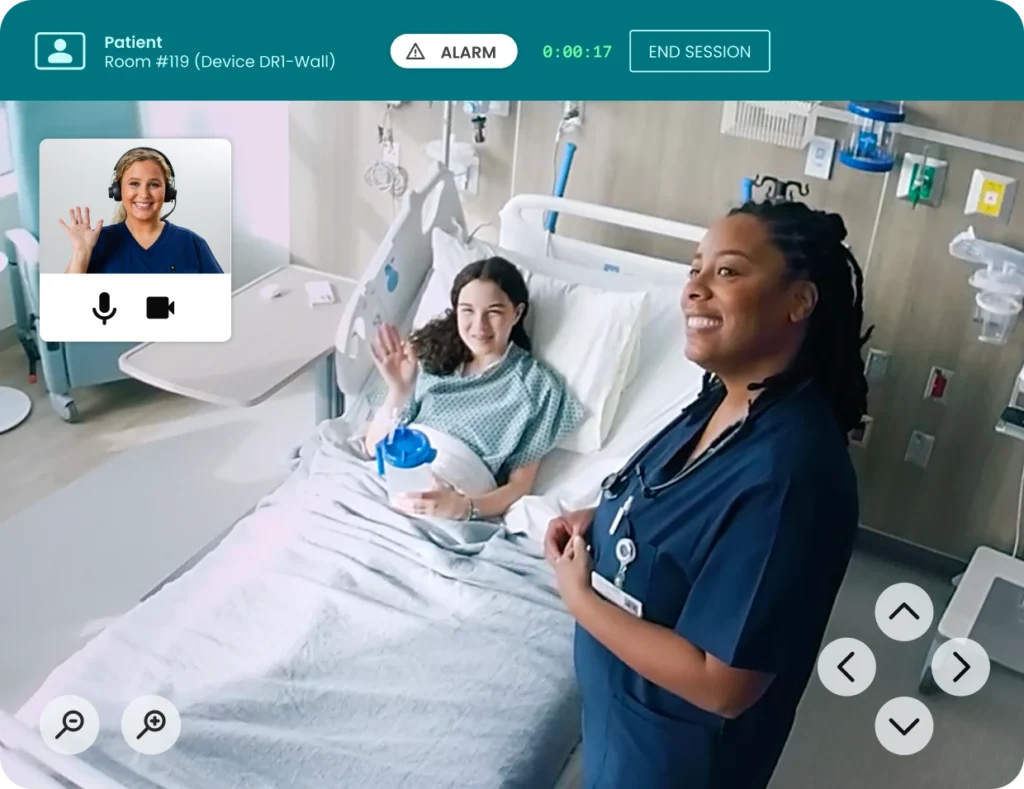
Caregivers can now provide thoughtful care from anywhere with a fast, reliable two-way connection that supports virtual care for admission, discharge, specialty consults, rounding, and more.
AvaSure Episodic™ Solution
Virtual care is essential to adapt
As healthcare systems grapple with rising costs, staffing shortages, and increasing complexity of patient care, the urgency for change is at an all-time high. With a staggering 22.7% turnover rate among staff, hospitals struggle to uphold their commitment to patient care. Amidst these challenges, there’s a growing recognition that digital transformation measures are essential.
Hospitals across the world are adopting virtual care solutions to alleviate the mounting pressures facing healthcare systems globally. This signals a brighter future for both patients and healthcare providers alike. Using technology to facilitate remote consultations, monitoring, and support, virtual care offers a pathway toward improved staff satisfaction, enhanced patient experiences, better health outcomes, and more efficient hospital operations. With the right virtual care platform, hospitals can redefine patient experiences and revolutionize the way healthcare services are delivered.
The path to virtual care isn’t always clear
As hospitals and health systems embark on the journey toward the hospital room of the future, the road is fraught with obstacles, requiring hospitals to confront complex issues head-on. Historically, hospitals have adopted point solutions to address specific virtual care needs, resulting in fragmented systems and siloed approaches. Now, there is a growing recognition of the need to consolidate these disparate solutions into integrated virtual care platforms that can scale across the entire enterprise. Such endeavors require a significant investment, posing financial constraints for resource-strapped healthcare institutions. Without a clear adoption model that demonstrates ROI, hospitals struggle to build the business case for virtual care, further complicating the decision-making process.
Amidst this backdrop, hospitals are piloting virtual care platforms, each with varying levels of success and clinical adoption. The stakes are high, as the initial impression of these pilots can significantly influence the trust that caregivers have in these technologies to deliver on their promise. Hospitals must tread carefully, ensuring that their chosen solutions and partners not only meet the clinical needs of their patients but also garner widespread acceptance and support from healthcare professionals. Support from clinical, IT, and finance departments paves the way for successful implementation and integration into routine care delivery practices.
Episodic™ Care solution powered by AvaSure’s Intelligent Virtual Care Platform
Step into the hospital of the future with AvaSure’s new virtual care solution, AvaSure Episodic™. Designed in close collaboration with clinicians and technical experts, AvaSure Episodic delivers a reliable two-way video solution designed to scale to the entire enterprise.
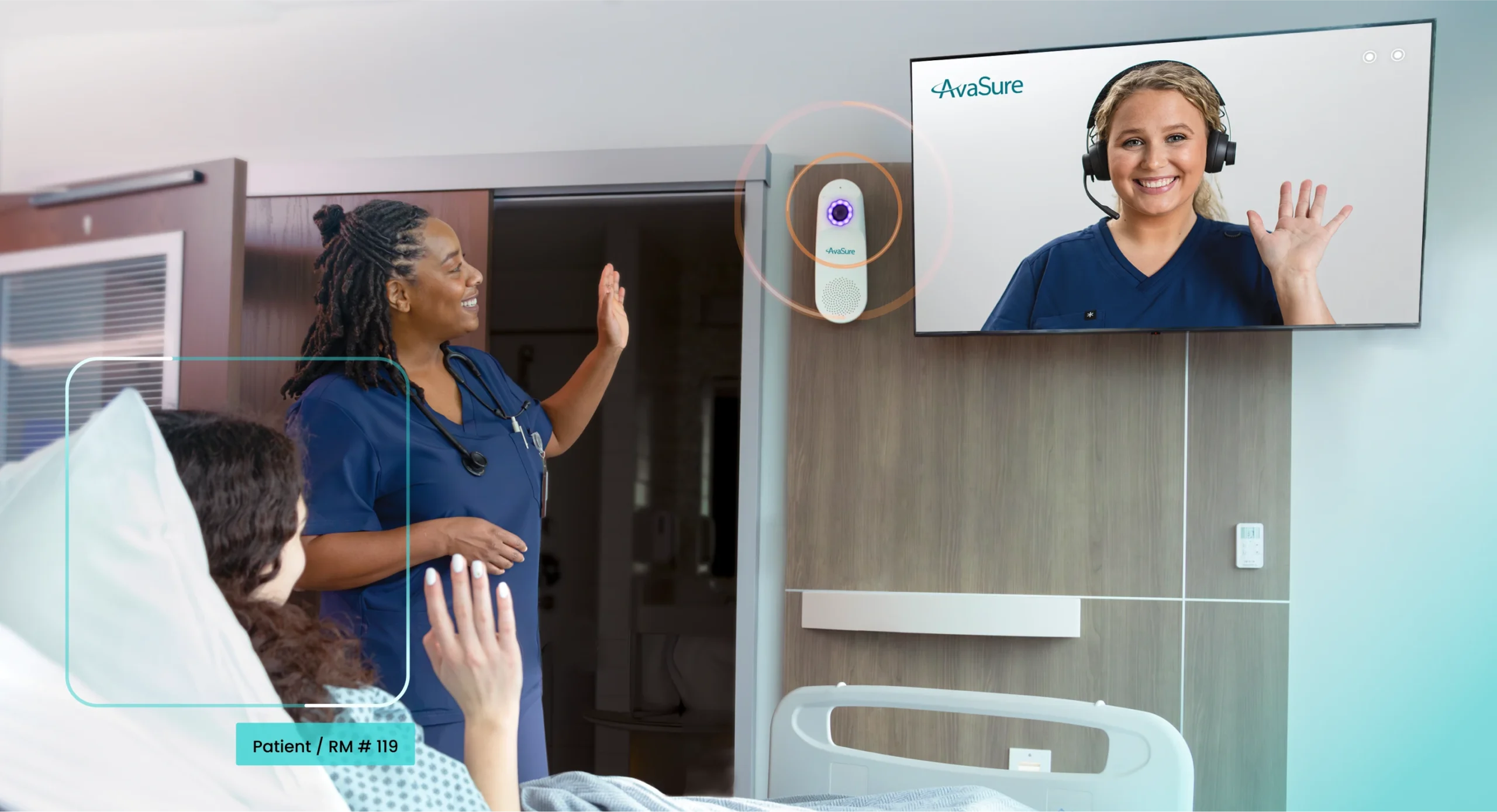
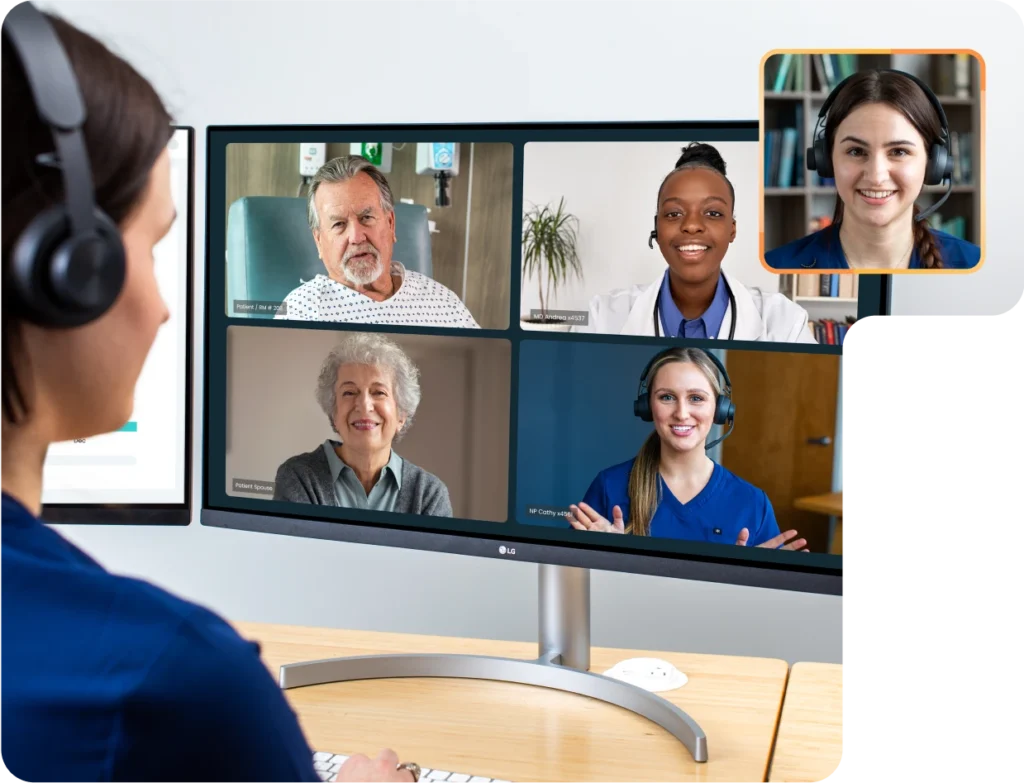
With the AvaSure Episodic solution, caregivers gain full control over the quality of remote, consultative patient interactions. It enables two-way video with group calling and polite entry, allowing for specialty consults, admitting and discharging patients, rounding, and more. Virtual care with the Episodic solution frees up time for nursing and support staff, enables seamless remote nursing workflows, and allows collaboration with specialists across the country. With AvaSure, clinicians can achieve more without stretching themselves thin.
Highlights:
Group calling to include multiple parties: Care teams can easily invite family members, interpreters, caregivers, and consulting specialists from multiple locations to join a group session, saving time and making conversations more efficient.
Polite entry to patient rooms: Caregivers respect patients’ privacy by notifying patients before entering the room virtually with a doorbell chime, allowing them time to accept the call.
Web-based access: Neither caregivers nor families need to download anything – all access to episodic care sessions is delivered via a web browser, whether on mobile or desktop.
Fast, reliable two-way video: Clinicians admit and discharge patients remotely, engage with them on rounds, connect with specialists in other locations, and provide training and mentoring to other staff members using portable, flexible devices with high-fidelity cameras.
Integration with Epic: Caregivers can easily launch virtual patient visits from Epic without disrupting their workflow, creating a seamless experience.
The ability for a variety of caregivers to connect with a patient, whether it is a nurse, physician, specialist, or case manager, opens a whole realm of possibilities to drive better patient experience, more efficient operations, and reduced burden on bedside staff. AvaSure’s Intelligent Virtual Care Platform allows healthcare teams to seamlessly integrate in-person and virtual caregivers, promoting continuity of care and ensuring treatment plans are tailored to individual needs. Interpreters and family members can also participate in virtual group interactions to simplify communication. By leveraging AvaSure to involve a diverse range of caregivers in patient care, healthcare organizations can optimize resource utilization, streamline workflows, and alleviate pressure on frontline staff, ultimately enhancing the quality of care and patient outcomes.
The AvaSure Episodic solution can support a variety of virtual care workflows for virtual nurses, physicians, specialists, and other caregivers, including:
Admission and discharge documentation: Virtual caregivers streamline the admission and discharge documentation process by securely reviewing, capturing, and updating patient records remotely. This reduces administrative burden, minimizes errors, and ensures accurate and efficient documentation, enabling smoother transitions of care for patients.
Patient education: Patients can benefit from virtual education sessions delivered by healthcare professionals, empowering them with knowledge and resources to better understand their conditions, treatments, and self-care strategies, decreasing the risk of readmissions.
Novice nurse mentorship: Novice nurses receive guidance, feedback, and support from experienced mentors remotely, often offering a second set of eyes for high-risk medications or patient assessments. Mentors can observe, assess, and provide tailored coaching to help novice nurses develop clinical skills, confidence, and competence in their practice, ultimately improving patient outcomes and enhancing the overall quality of care delivery.
Specialty consults: Care teams can easily connect with specialty consultants through virtual care platforms, enabling timely consultations and interdisciplinary collaboration, ensuring that patients receive the most appropriate and effective care tailored to their needs.
Proactive rounding: Virtual rounding enables care teams to conduct proactive check-ins with patients remotely, ensuring ongoing monitoring of their condition, progress, and satisfaction. Through video conferencing or virtual visits, healthcare providers can address any concerns, provide emotional support, and reinforce treatment plans, promoting continuity of care and patient-centered communication.
One platform can change everything
The ideal virtual care platform must meet the criteria set by both clinical and IT leaders. In addition to essential hardware and monitoring software, today’s virtual care platforms must meet increasingly high enterprise-level IT standards. They should operate on open, scalable infrastructure to seamlessly integrate with existing systems, ensuring minimal downtime and optimal connectivity for care teams. They should include robust analytics and an intelligence layer for generating clear, measurable outcomes, along with AI capabilities to enhance patient safety and alleviate the workload of virtual staff. Most importantly, access to comprehensive support is essential, particularly for clinical teams navigating change management and envisioning a sustainable virtual care strategy. That’s a tall order.
AvaSure is the only virtual care platform that fulfills each of these crucial requirements, continuously innovating while demonstrating a proven record of clinical outcomes. Hospitals use AvaSure for AI-powered continuous monitoring, episodic care, and building a greater ecosystem of solutions and workflows that transform the hybrid care delivery model. Our team of experienced nursing and healthcare experts collaborate with customers to shape a vision for the future and bring it to life.
One platform can change everything. AvaSure’s Intelligent Virtual Care Platform combines continuous monitoring and episodic care solutions designed to free up more time for nursing and support staff, enable seamless remote care workflows, and ensure better outcomes for patients.