Category: Featured

The hospital room of the future: Episodic™ Care solution powered by AvaSure’s Intelligent Virtual Care Platform 

virtual care platform

Caregivers can now provide thoughtful care from anywhere with a fast, reliable two-way connection that supports virtual care for admission, discharge, specialty consults, rounding, and more.

AvaSure Episodic™ Solution

Virtual care is essential to adapt

As healthcare systems grapple with rising costs, staffing shortages, and increasing complexity of patient care, the urgency for change is at an all-time high. With a staggering 22.7% turnover rate among staff, hospitals struggle to uphold their commitment to patient care. Amidst these challenges, there’s a growing recognition that digital transformation measures are essential.

Hospitals across the world are adopting virtual care solutions to alleviate the mounting pressures facing healthcare systems globally. This signals a brighter future for both patients and healthcare providers alike. Using technology to facilitate remote consultations, monitoring, and support, virtual care offers a pathway toward improved staff satisfaction, enhanced patient experiences, better health outcomes, and more efficient hospital operations. With the right virtual care platform, hospitals can redefine patient experiences and revolutionize the way healthcare services are delivered.

The path to virtual care isn’t always clear

As hospitals and health systems embark on the journey toward the hospital room of the future, the road is fraught with obstacles, requiring hospitals to confront complex issues head-on. Historically, hospitals have adopted point solutions to address specific virtual care needs, resulting in fragmented systems and siloed approaches. Now, there is a growing recognition of the need to consolidate these disparate solutions into integrated virtual care platforms that can scale across the entire enterprise. Such endeavors require a significant investment, posing financial constraints for resource-strapped healthcare institutions. Without a clear adoption model that demonstrates ROI, hospitals struggle to build the business case for virtual care, further complicating the decision-making process. 

Amidst this backdrop, hospitals are piloting virtual care platforms, each with varying levels of success and clinical adoption. The stakes are high, as the initial impression of these pilots can significantly influence the trust that caregivers have in these technologies to deliver on their promise. Hospitals must tread carefully, ensuring that their chosen solutions and partners not only meet the clinical needs of their patients but also garner widespread acceptance and support from healthcare professionals. Support from clinical, IT, and finance departments paves the way for successful implementation and integration into routine care delivery practices.

Episodic™ Care solution powered by AvaSure’s Intelligent Virtual Care Platform

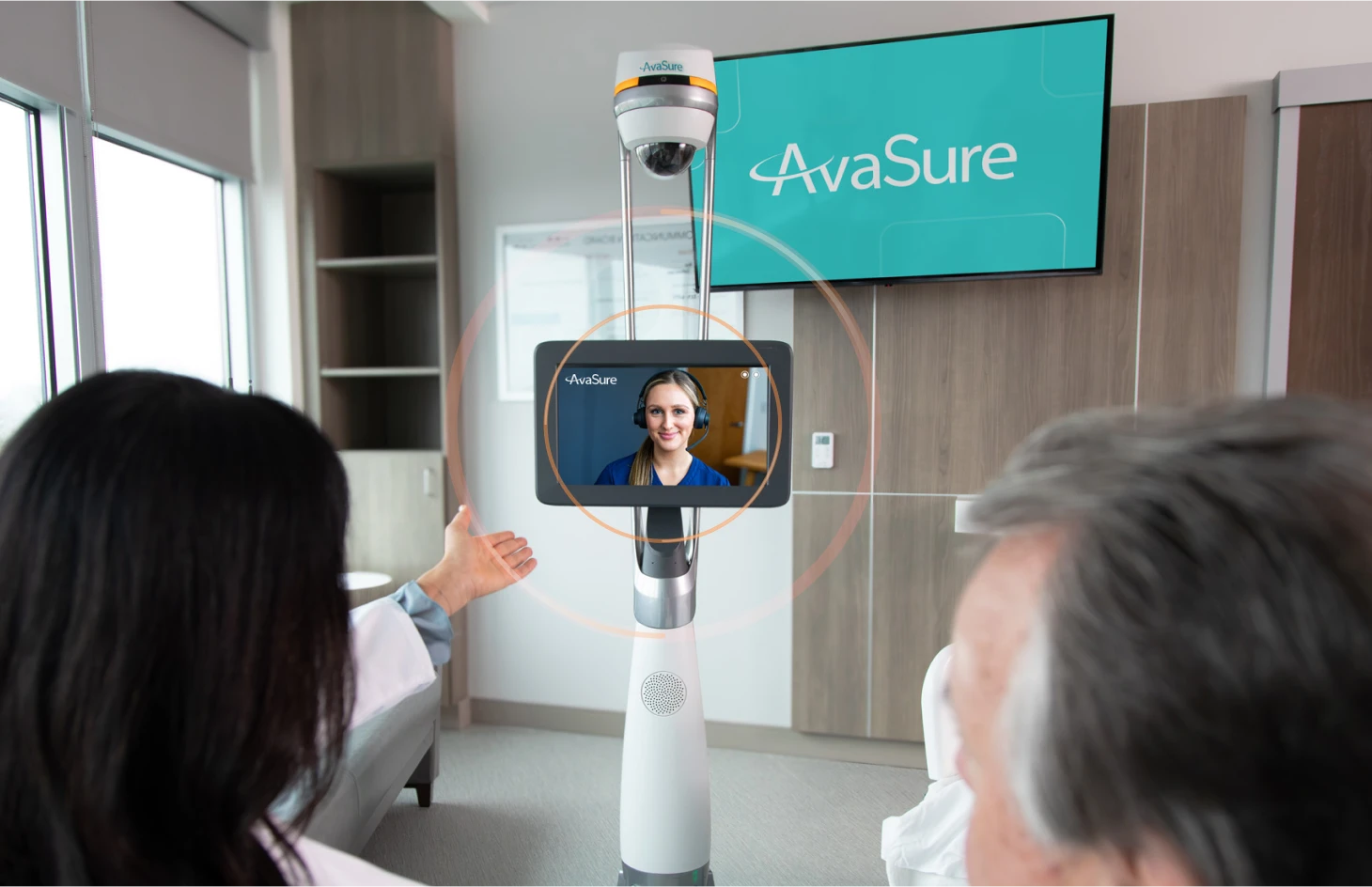
Step into the hospital of the future with AvaSure’s new virtual care solution, AvaSure Episodic. Designed in close collaboration with clinicians and technical experts, AvaSure Episodic delivers a reliable two-way video solution designed to scale to the entire enterprise. 

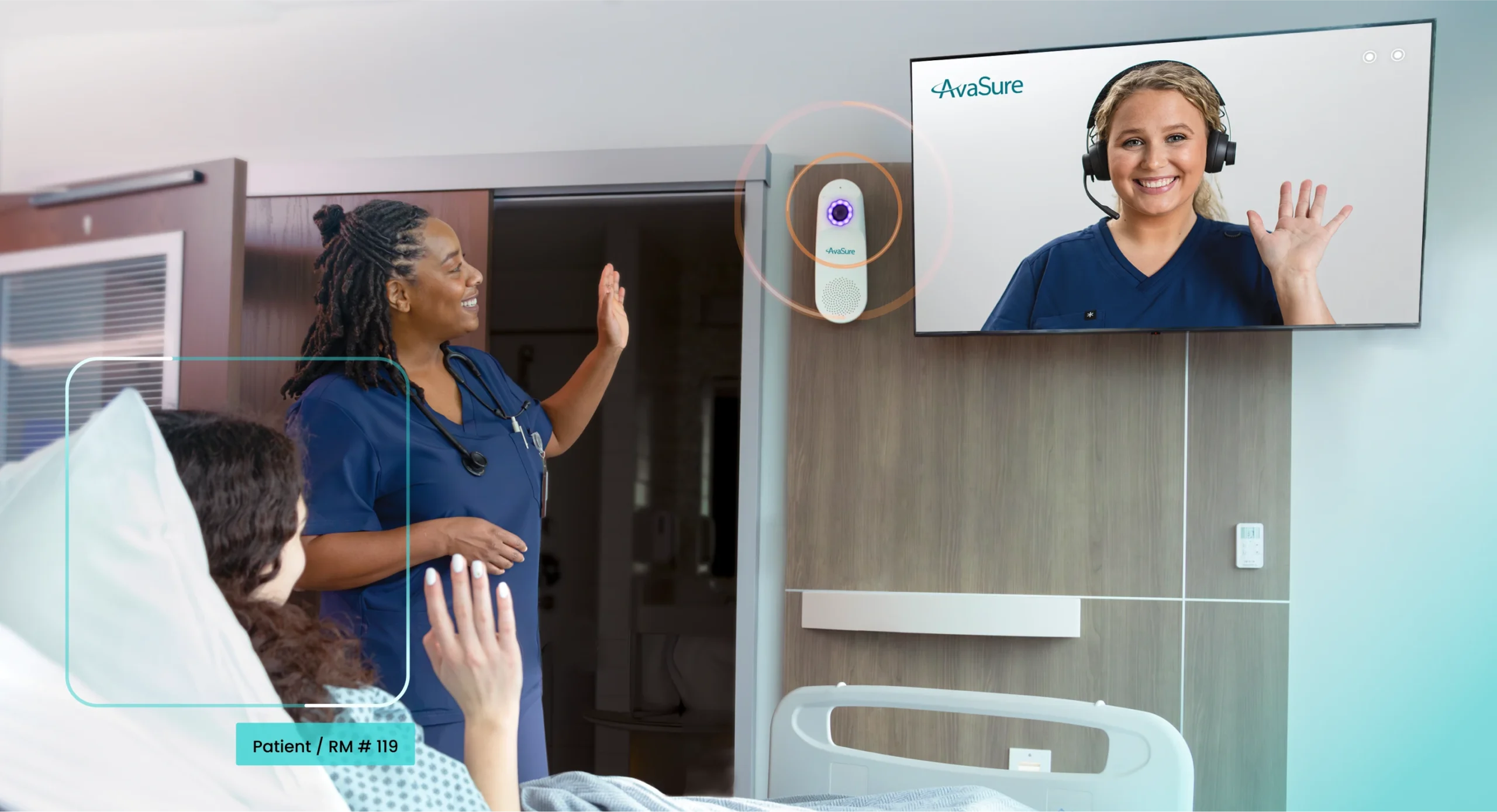
With the AvaSure Episodic solution, caregivers gain full control over the quality of remote, consultative patient interactions. It enables two-way video with group calling and polite entry, allowing for specialty consults, admitting and discharging patients, rounding, and more. Virtual care with the Episodic solution frees up time for nursing and support staff, enables seamless remote nursing workflows, and allows collaboration with specialists across the country. With AvaSure, clinicians can achieve more without stretching themselves thin.

Highlights: 

  • Group calling to include multiple parties: Care teams can easily invite family members, interpreters, caregivers, and consulting specialists from multiple locations to join a group session, saving time and making conversations more efficient.
  • Polite entry to patient rooms: Caregivers respect patients’ privacy by notifying patients before entering the room virtually with a doorbell chime, allowing them time to accept the call.  
  • Web-based access: Neither caregivers nor families need to download anything – all access to episodic care sessions is delivered via a web browser, whether on mobile or desktop.
  • Fast, reliable two-way video: Clinicians admit and discharge patients remotely, engage with them on rounds, connect with specialists in other locations, and provide training and mentoring to other staff members using portable, flexible devices with high-fidelity cameras.
  • Integration with Epic: Caregivers can easily launch virtual patient visits from Epic without disrupting their workflow, creating a seamless experience. 

The ability for a variety of caregivers to connect with a patient, whether it is a nurse, physician, specialist, or case manager, opens a whole realm of possibilities to drive better patient experience, more efficient operations, and reduced burden on bedside staff. AvaSure’s Intelligent Virtual Care Platform allows healthcare teams to seamlessly integrate in-person and virtual caregivers, promoting continuity of care and ensuring treatment plans are tailored to individual needs. Interpreters and family members can also participate in virtual group interactions to simplify communication. By leveraging AvaSure to involve a diverse range of caregivers in patient care, healthcare organizations can optimize resource utilization, streamline workflows, and alleviate pressure on frontline staff, ultimately enhancing the quality of care and patient outcomes.

The AvaSure Episodic solution can support a variety of virtual care workflows for virtual nurses, physicians, specialists, and other caregivers, including:

  • Admission and discharge documentation: Virtual caregivers streamline the admission and discharge documentation process by securely reviewing, capturing, and updating patient records remotely. This reduces administrative burden, minimizes errors, and ensures accurate and efficient documentation, enabling smoother transitions of care for patients.
  • Patient education: Patients can benefit from virtual education sessions delivered by healthcare professionals, empowering them with knowledge and resources to better understand their conditions, treatments, and self-care strategies, decreasing the risk of readmissions. 
  • Novice nurse mentorship: Novice nurses receive guidance, feedback, and support from experienced mentors remotely, often offering a second set of eyes for high-risk medications or patient assessments. Mentors can observe, assess, and provide tailored coaching to help novice nurses develop clinical skills, confidence, and competence in their practice, ultimately improving patient outcomes and enhancing the overall quality of care delivery.
  • Specialty consults: Care teams can easily connect with specialty consultants through virtual care platforms, enabling timely consultations and interdisciplinary collaboration, ensuring that patients receive the most appropriate and effective care tailored to their needs.
  • Proactive rounding: Virtual rounding enables care teams to conduct proactive check-ins with patients remotely, ensuring ongoing monitoring of their condition, progress, and satisfaction. Through video conferencing or virtual visits, healthcare providers can address any concerns, provide emotional support, and reinforce treatment plans, promoting continuity of care and patient-centered communication.

One platform can change everything 

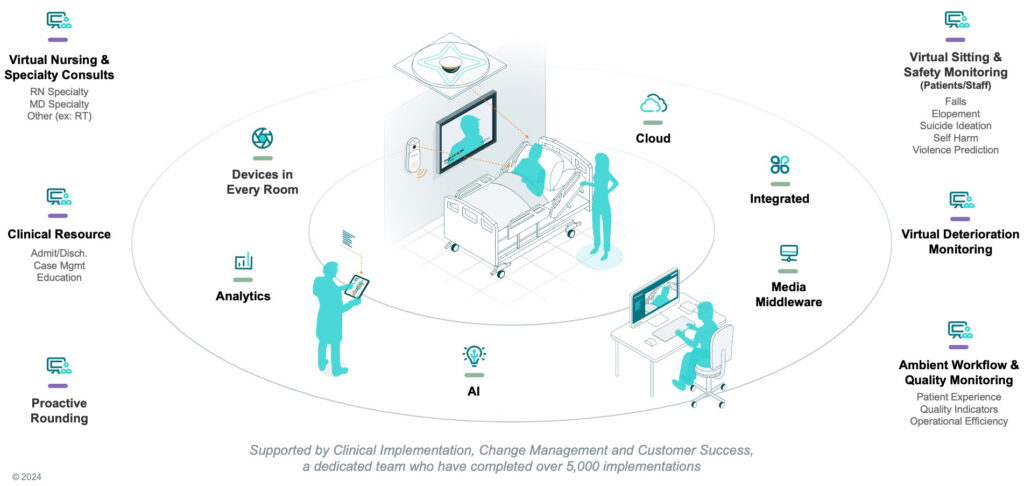
The ideal virtual care platform must meet the criteria set by both clinical and IT leaders. In addition to essential hardware and monitoring software, today’s virtual care platforms must meet increasingly high enterprise-level IT standards. They should operate on open, scalable infrastructure to seamlessly integrate with existing systems, ensuring minimal downtime and optimal connectivity for care teams. They should include robust analytics and an intelligence layer for generating clear, measurable outcomes, along with AI capabilities to enhance patient safety and alleviate the workload of virtual staff. Most importantly, access to comprehensive support is essential, particularly for clinical teams navigating change management and envisioning a sustainable virtual care strategy. That’s a tall order. 
virtual care platform

AvaSure is the only virtual care platform that fulfills each of these crucial requirements, continuously innovating while demonstrating a proven record of clinical outcomes. Hospitals use AvaSure for AI-powered continuous monitoring, episodic care, and building a greater ecosystem of solutions and workflows that transform the hybrid care delivery model. Our team of experienced nursing and healthcare experts collaborate with customers to shape a vision for the future and bring it to life. 

One platform can change everything. AvaSure’s Intelligent Virtual Care Platform combines continuous monitoring and episodic care solutions designed to free up more time for nursing and support staff, enable seamless remote care workflows, and ensure better outcomes for patients. 
Read the press release. 

The 5 stages of adopting intelligent virtual care: AvaSure Adoption Model

virtual nurse providing care on mobile device

By Lisbeth Votruba, MSN, RN

Over the past year, there have been numerous publications, pilots, and discussions on virtual care. Many organizations are planning for a future where virtual team members are seamlessly integrated into care teams, where a device exists in every room enabling episodic and continuous video visits and where technology helps to augment nursing staff. However, amongst these conversations there is little clarity or direction on how to get there. Throughout AvaSure’s 5,000+ deployments at over 1,100 customer sites, we have collected best practices on implementing virtual care programs that deliver real results and outcomes. We employ clinicians at all levels of our organization who are engaged in forums across the country, led by AONL, AMSN, ATA, and others, on the creation of these virtual teams. Based on our work with early adopters and these industry experts, we have designed a prescriptive path to achieving the future of a fully integrated virtual care facility.

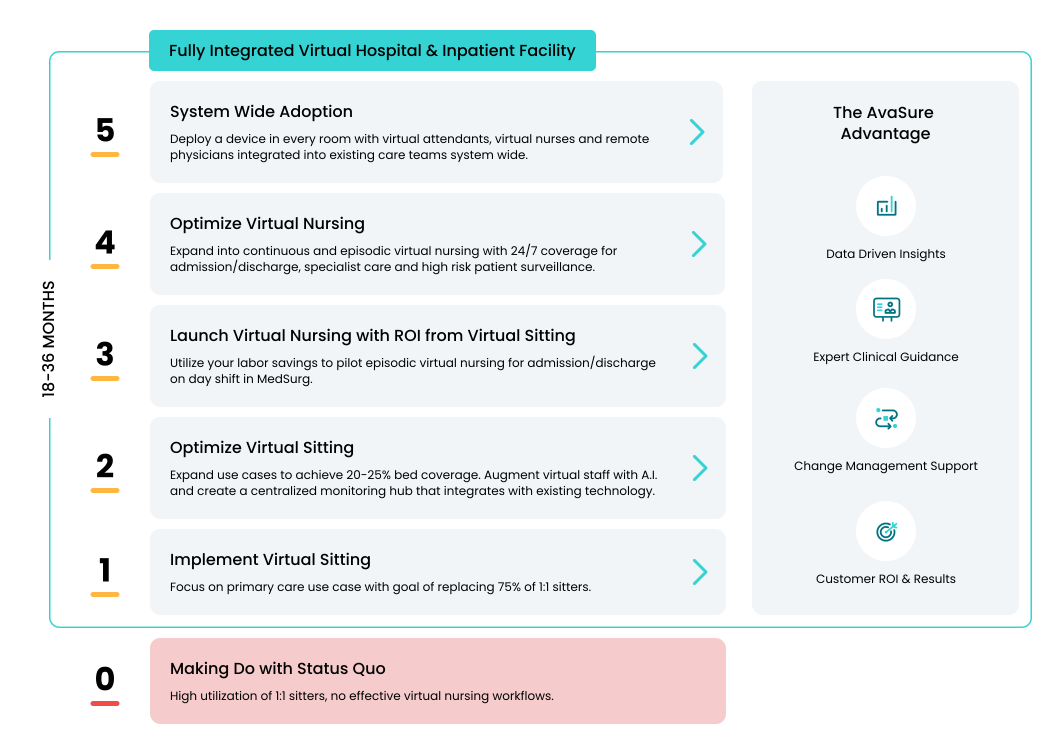
AvaSure’s Intelligent Virtual Care Adoption Model

Defining the 5 stages

The AvaSure Intelligent Virtual Care Adoption Model consists of five progressive stages, each of which builds on the foundation of the prior stage to financially fuel the next step, generating real patient outcomes at every stage.

Stage 1: Implement virtual sitting

The virtual care adoption model begins with implementing virtual sitters, who are trained, unlicensed personnel who use video and audio connections to watch over patients aiming to improve overall safety. The primary goals of this stage are to enhance patient safety while replacing up to 75% of one-to-one sitters for at-risk patients with virtual sitters. The clinical evidence demonstrating virtual sitting is superior to in-person sitters for preventing falls is irrefutable. The return on investment is robust, stemming from increased staffing efficiency at a ratio of 1-to-12 instead of 1-to-1, along with substantial cost savings resulting from reduced falls. These savings can be directed towards improving the hospital’s bottom line or reinvested to support subsequent phases of the adoption model.

Stage 2: Optimize virtual sitting

In the second stage, hospitals can look to optimize their virtual sitting program through expansion to other use cases and care units. Beyond falls, other established use cases include elopement, substance use withdrawal, low/moderate suicide risk, pediatrics, workplace violence prevention, and more. The staffing efficiency of virtual sitting allows hospitals to expand the reach of monitoring from what is feasible to cover with 1-to-1 staffing and cover additional use cases covering up to 20% and 25% of patient beds.

Upon recognizing the success and cost savings of virtual sitting, many organizations choose to centralize their monitoring across the health system leading to further efficiencies of scale. For example, Trinity Health implemented AvaSure system-wide, covering 25 states in just nine months. Patient monitoring is conducted from two central “super hub” locations. At this scale, the health system was able to provide 1.8 million hours of virtual sitting at 85% less cost ($24 million) in 2021.

Finally, integrating artificial intelligence (AI) to supplement virtual staff assists in alleviating the cognitive burden on virtual care staff. This improvement not only automatically alerts staff to potential risks of adverse events but also contributes to better outcomes.

Stage 3: Launch virtual nursing with return-on-investment from virtual sitting

Upon realizing substantial labor savings and cost avoidance through enhanced patient safety, these funds can be employed to initiate a virtual nursing program utilizing the same devices and platform.

A fundamental goal of any virtual nursing program is to allow nurses to work at the top of their license. This is not possible when there is a shortage of unlicensed personnel. Having freed up personnel from 1-to-1 sitting tasks, they are better able to support bedside RNs in a model of care that virtual nursing can also support. Many facilities choose to start with admission and discharge support, where a virtual nurse helps with the documentation and administrative tasks, supporting the bedside RN. However, based on organizational goals – there are a multitude of use cases virtual nursing can pilot with.

Holzer Health System, a two-hospital system in Ohio, is currently in stage 3 with an inpatient virtual care program. The health system implemented the program to address challenges associated with patient safety as well as issues with patient access to specialty care. The hospital installed a total of 16 monitoring devices, providing both virtual sitting and virtual specialty care from a central hub. “I am the only certified wound and ostomy nurse for inpatient facilities at Gallipolis and Jackson.This has provided a way for me to do video consults with the Jackson facility, which saves precious time as well as mileage,” said Natalie Gardner, BSN, RN, CWON, CFCS.  

Stage 4: Optimize virtual nursing

After a virtual nursing pilot demonstrates its efficacy in enhancing specific areas such as nurse satisfaction and retention, expediting patient flow, or reducing adverse events, then it’s time to scale up.

One example of an AvaSure customer that has optimized its virtual nursing program is UCHealth, a nonprofit healthcare organization based in Colorado that consists of 13 hospitals and 2,000 inpatient beds across the state.

Three years following the success of its virtual sitting program in enhancing patient care, UCHealth broadened its virtual care capabilities by including a virtual nursing program. This program, facilitated by experienced nurses, assists clinicians in promptly identifying hospitalized patients exhibiting signs of deterioration. This early detection enables clinicians to administer timely treatment, ultimately leading to improved patient outcomes.

UCHealth has 693 AvaSure devices (both mobile and fixed room devices) installed across the health system. Senior, expert nurses at the Virtual Health Center can visualize ICU patients across the health system as well as patients outside ICU who have a rapid response call activated. The health system utilizes AI deterioration algorithms to proactively intervene. This has led to improved sepsis detection, and decreased code blues, but most importantly, Dr. Hemali Patel, Associate Chief Medical Officer, explained the virtual care team has helped save the lives of 786 patients together with the frontline staff.

Stage 5: System-wide adoption

The culmination of intelligent virtual care adoption will include a device in every room and have virtual team members seamlessly integrated into every care team. Technology is being used to provide exceptional experiences for both the patient and caregivers, helping to continuously improve outcomes, fully optimize the labor force, keep labor costs manageable, and bring joy back to caregiving.  

The Key to Success: The AvaSure Advantage

Faced with high labor costs and a dwindling supply of workers, many hospitals across the nation are in various stages of virtual nursing adoption – a number that is sure to rise as health systems’ operating challenges persist. As they do, the primary use case for virtual nursing today – rounding, admissions and discharge, patient education, documentation support – will be joined by other applications of this emerging technology. However, success may seem unattainable without a coherent business case, buy in of clinical and IT teams, and achievable KPIs. 

AvaSure has the expertise to guide hospitals through their virtual care adoption journeys. We have a platform with the necessary technology to support a multitude of use cases, but more importantly we have the clinical expertise to help develop your program from the ground up. From policy and procedure development, workflow design and change management support, our people will be the difference in making your program a success. Backed with data and insights, we can help hospitals stair step your way to the deployment of an intelligent virtual care platform, helping you step into a future where cutting-edge technology and compassionate care converge.

AvaSure Recognized as #1 for Cost Savings in KLAS Research Report

#1 for cost savings by KLAS

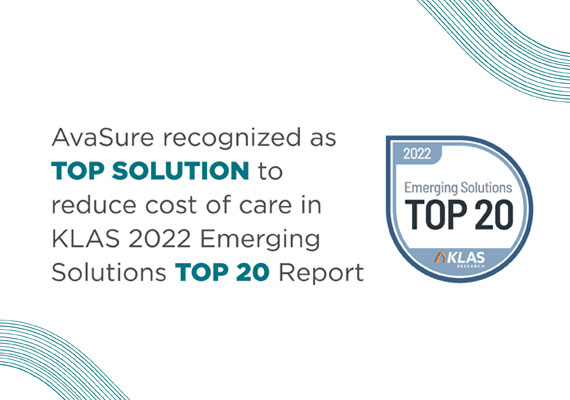
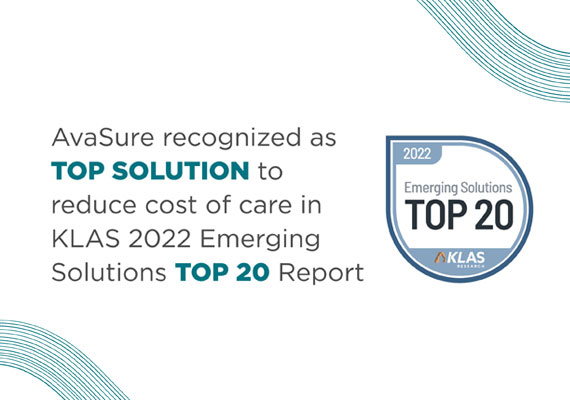
Earlier this month, KLAS, a research and insights firm focused on improving healthcare, published its first-ever Emerging Solutions Top 20 report highlighting new solutions with the greatest potential to disrupt and improve healthcare. For the first time, KLAS asked 16 prominent members of the healthcare community with broad HIT expertise to read all current KLAS reports on emerging technology and rate their perception of the solutions based on their potential to impact healthcare’s Quadruple Aim of improved outcomes, reduced cost of care, improved patient experience and improved clinician experience.

AvaSure not only made the list, it was identified as the No. 1 solution for reducing healthcare costs.

As KLAS bases its performance reports on customer experience, we want to thank you for believing in AvaSure as a trusted partner, making it possible for us to achieve this recognition. We pride ourselves on providing a cost-efficient platform and a wrap-around clinical program to ensure you can navigate the perfect storm brewing in healthcare today.

This recognition shows that we are fulfilling our original mission of lower costs through fewer sitters, a more efficient and successful means of improving patient safety and quality of care.

We aim to do so much more.

Our current challenge is helping solve healthcare’s staffing crisis. AvaSure’s virtual care platform enables health systems to optimize and augment their labor force with a team of virtual monitors and RNs who support the bedside teams with tasks such as admission, discharge and patient education. This gives nurses peace of mind and more time for direct patient care.